AI and Decision Making: The Tech Shaping Leadership

AI and Decision Making: The Tech Shaping Leadership

AI and Decision Making: The Tech Shaping Leadership

What happens when a decision you made fails? Revenue falls, stocks crash, and the worst part is that employees who trusted you have to be laid off.

A leader’s decision-making has to be strategically sound. Like a game of Chess or Go, even if it can’t predict the future, the move must make sense in your own context. Whether that’s serving the shareholders, improving employee engagement, or developing something that truly matters.

Yes, revenue matters. Without it, businesses are doomed.

However, it’s a decision that leaders make that leads to revenue, and there are a lot of decisions to go around. A leader is swamped and cognitively spent every day.

That’s why C-suites, investors, and managers protect themselves so closely- because a wrong decision, at their level, means loss of their job and their subordinates. Whether someone admits it or not, that is a blow to a person’s pride as a leader.

However, there is a golden line: AI is helping leaders make decisions. But the reason behind it might not be that the machine knows better.

The reason is simple, it’s a library that can be questioned and if properly used can question back. And yet, it can become a crutch to be relied on. If the AI is taking all decisions, what are you doing?

Being accountable won’t be enough. The tool must be harnessed the way the steam engine was- with deliberate precision.

The Chessboard: Strategic Choices in the Age of AI

In Chess, once the players make 5 moves each, the number of possible moves is an unimaginable number called the Shannon Number, named after Claude Shannon. The number is 69,352,859,712,417

Businesses function similarly; your decisions branch out into many possibilities. It’s basic probability. And it is possibly one of the first things any leader learns: no decision is 100% foolproof. Something always goes awry.

Doesn’t that sound exhausting?

The Weight of Too Many Moves: Decision Fatigue.

Decision fatigue is a real phenomenon experienced by leaders of all kinds. The scope hardly matters; the number of decisions does, and the scale.

After all, you can’t delegate these. And anyone doing so is no leader but rather a caricature of the typical office manager. While actions can be delegated, decisions cannot. And with decisions comes the noise of the people surrounding you.

“Where are the reports?”

“Hey, can you help the XYZ team with the product planning?”

“What about Q2? What have you done to increase revenue for the upcoming quarter?”

“Yeah, Tom from product got fired. We need a new hire, and you need to sign off on it. Oh, what do you mean you didn’t know?”

And this is in the first 4 hours of you being in the office. A leader, it seems, has to put out fires. Not to mention the onslaught of salespeople calling you to sell their solution to you. Luckily, you got a PA to handle that.

Wait, where’s your PA?

Another task, another day.

All leading to analysis paralysis.

From Grandmaster to Game Piece: Risk Management or Complacency?

AI can change all of that. This powerful tool offers everything a leader needs, from simulation to acting as a PA to screening calls to automating workflows.

Wow. The potential is endless.

You can finally break the chain of analysis paralysis and make informed decisions. Isn’t that why you got those AI systems in the first place? To augment and not reduce?

But what happens when you become complacent and dependent? Finally, the decisions have been outsourced, but their weight hasn’t.

You still carry them. The consequences are still with you.

This article by Forbes illustrates how top leaders, more than their employees, are using ChatGPT for better answers- for better actionable insights. The article says that 84% have bought products based on ChatGPT recommendations.

This is inevitable.

But what if the products are bad and your leadership is questioned?

What if it’s good, you over-rely on AI and subconsciously begin delegating decision-making, only passively approving, rather than being an active strategist?

The question you have to ask here is: who is making the move?

The Machine as Second Board: Using AI Without Losing Agency.

That’s enough pessimism. But let’s look at this: AI isn’t just threatening the jobs of your subordinates. But leaders as well.

It is a reality you will eventually have to face.

But what if you didn’t have to?

One of the most under-talked events in corporate history is how Shell overcame the 1973 crisis.

They just fed their top execs with possibilities. Shell hired analysts who used statistics to help leaders think in novel ways. And what do you know? Shell avoided one of the most perilous oil crashes in history.

This is what AI is for.

It won’t play for you, but it will help you understand the probabilities of what your move might do. And then empower you to pick the best one. Leaders must experiment with this technology- using it broadens what they think is possible.

But the use cases with which they are currently being used are almost unimaginative. It’s not used to see the possibilities but to eliminate them. Hasn’t the unpredictability of the stock market shown you that prediction is impossible and everything is an educated guess?

The future of leadership does not rest with the businessman who can predict. But instead, one who can create possibilities, something AI systems are primed for.

The Battlefield: Leadership, Risk, and Accountability

When Moves Fail: Accountability

AI systems can make your business feel safe. But the cascading effects of this tech are still unknown. Just speculation that AI might be a bubble sent analysts and the market scrambling. If the tech fails to live up to its almost magical promise, the market will burst.

And leaders who championed this in-house will be blamed.

Millions lost to a “safe bet.”

This is accountability. Not to mention the loss of jobs that any leader will have to carry with them.

However, AI is genuinely utilitarian. Between touting it as a medicine for all woes and an enemy of the people, there is a middle path that everyone is overlooking: AI is technology, not an evolution.

It was the natural course that our computing powers were going to take, as Alan Turing intended. And the failure or success of this tech will be attributed to the leader using it.

Let’s illustrate this.

Say you buy an Agentic AI, you bought it because one of your AI bots suggested it after days or months of talking and comparing. All the things that Google used to do.

But the confidence you have in this decision won’t be the same as Google’s because there, the opinions were of human beings, prone to bias. You have collaborated with the LLM to actually be authentic.

And the agentic AI fails.

Who do you blame? Yourself or the machine?

That’s a question to think about.

When Moves Succeed: Leadership

But what if it works and proves ROI? This is the scenario we want.

And not just once, mind you, but many times. The decisions work as you intended. And perhaps this is where the tech is going, making decisions foolproof.

But then why do shareholders need the CEO, the CFO, the CMO, or anyone? It could just be a web of AIs talking to each other and making necessary decisions.

Isn’t this a practical question to consider? Virtually, small businesses would be eliminated by this because what a small business could do, a $5000 AI system could do, too. And the future of that monopoly seems likely.

A lot of AI-agents that were specialised tools will be cannibalized by players with more resources.

What then is the role of the leader?

It is to move from decision-making to exploration. If your revenue is generated by machines, you will have to redirect the talented people in your employ to work on the possibilities the AI systems have put forth before you.

That is the logical, actionable step here.

The Library: AI as Advisor, Not Oracle

The Library That Questions Back

One of the best things about the AI is its ability to question when prompted. For example, if you have used Claude, it has a function to change its voice from learning to explanatory, to concise.

The explanatory and learning functions are amazing. They ask thought-provoking questions that help a leader reflect on what they’re doing.

It asks you questions like a teacher or someone who has expertise in that area. Of course, it’s not hallucination-free, but it doesn’t have to be to make someone think.

You guide it, and it guides you back.

That is a core difference between AI-dependent and AI-augmented decision-making.

The active participation of the leader.

One of the ways AI can help you and not cripple you is to find the blind spots that exist in your systems, like an expert would- but the AI system would be customized to your organization down to its micro-functions and then suggest changes.

But it will be the leader who will have to understand and implement the changes and ask the system why as many times as possible.

The possible hiccup

This is a sugarcoat. It’s not a hiccup but the elephant in the room- the visceral reaction many in top management had with AI: let’s replace our team.

Makes business sense to remove your programmers, marketing team, customer success, and whatnot, keeping the key members and integrating AI that might be cheaper to run in the long run.

Of course, this way, no one has to deal with the humanity of it all.

And this is a risky move. Not because people aren’t irreplaceable, but rather that failure won’t be able to be attributed, nor would anyone be held accountable- the loop would crush the organization.

The future has no merit because while thinking (AI!), action (robotics!), agency (Agentic!) can be substituted, observing real-time changes is a gift that only people possess. They can look at patterns and say- hmm, maybe this won’t work.

Great leaders don’t predict; they explore what is possible and what isn’t, and direct their attention there.

Bad leaders want to eliminate this because it’s too much for them.

The question is: Which one are you?

Lead Generation For Manufacturers: Leveraging the Disruption

Lead Generation For Manufacturers: Leveraging the Disruption

Lead Generation For Manufacturers: Leveraging the Disruption

Manufacturing, the backbone of the world economy, is always neglected in B2B conversations.

Yet, it’s arguably the largest B2B market there is, connecting every other business- whether they know it or not.

The manufacturing industry is valued at ~$14 trillion, leagues ahead of SaaS and AI. And yet, it is one filled with marketing errors and irrelevant knowledge.

The stats make it evident just how ineffective marketing as a function is for manufacturing, even when the opportunity to target new segments.

It isn’t data-driven and is not connected to the buyers’ journey. But the major problem isn’t one of these things, but rather online content treating manufacturing as the same as other industries. It is not.

A vital problem that manufacturing faces, which its marketing has to understand, is disruption, because it’s this message that will resonate with its core buyers.

Let’s explore what that means.

What is lead generation in manufacturing, and why is it important?

This is for all the folks who aren’t in the know, but lead generation in the manufacturing industry is the marketing practice of showing up where your potential buyers are, communicating value to them, acquiring their data, and convincing them to buy your service or product.

One such example is the TSMC, a silicon manufacturing plant that will market its products to the AI and computing sectors, retain the information, contact them again, and convince them to buy through outreach and sales.

Just like all lead generation initiatives, manufacturers have to: –

  1. Define their ICP
  2. Understand their buyers’ pain points
  3. Position themselves as a solution
  4. Create and distribute the marketing message
  5. Generate inbound traffic and an outbound list. Powered by a structured lead generation engine.
  6. Make the sale.

That is essentially all manufacturers have to do.

Why is lead generation important in manufacturing?

Okay, this is where everything differs from other lead gen initiatives. In recent years, the SaaS industry has had to wake up to the buyers’ longer cycles. After all, businesses hit by COVID-19 have become risk-averse.

But manufacturers have been dealing with this for a long time.

  1. Buying cycles that take 18-24 months.
  2. Delays from compliance, legal, and procurement
  3. Custom Specifications and meeting these requirements.
  4. Supply-Chain disruptions

These challenges are as abstract as they come and affect manufacturers on a large scale. And this is a vendor-buyer problem- both of them face it and become wary of changing existing vendors they have trusted for years.

It’s a basic principle: if something isn’t broken, don’t fix it. And it’s this attitude that keeps buyers from switching- even if their current solution isn’t the best one.

Lead gen helps you penetrate this thinking through consistent marketing messages; it gives vendors leverage by empowering them to assess the cost of not switching. Especially when supported by precise targeted lead generation.

Strategies to generate high-quality leads in manufacturing

Manufacturers have to deal with content online that basically tells them to do all the basics of lead generation, missing all the crucial points to consider.

Of course, it’s easy to say, “Improve your marketing messages,” rather than telling you how to do it. There are a lot of how-tos on the topic of improving marketing messages, but there aren’t many that will help you actually put that into practice.

Marketing teams don’t need how-tos beyond ‘How to use GA4 to set up a funnel or customized goal’. That is what how-tos are for.

Marketers need methods to do what they do best: be analytically creative and target segments. This is our shot at those methods, tailored to manufacturers by leveraging the context of manufacturing.

These strategies are for leaders in manufacturing to improve the quality of leads. So it will be specific to their context.

Turn Supply Chain Chaos into Buyer Confidence

Manufacturers face a crucial problem- supply chain disruption, and the solution to this problem is gargantuan. A lot of goods get stolen, or there is a lack of inventory.

These are problems as old as export and import.

But what does that have to do with lead generation? The answer is simple- your buyers are expecting disruption, and they won’t be buying from you immediately. You need to build a relationship with them before you engage them in selling.

Your marketing and your own supply chain must understand their problems and address them through the marketing messages- making them feel heard and seen. You needn’t promise to change their supply chain, but position yourself as someone who knows this and has safeguards in place. Reinforced through transparent lead qualification processes.

This type of messaging will help you gain an edge over your competition.

Winning Over the 11-Person Buying Committee

Manufacturing has a long sales cycle, and there are two reasons behind it: changing vendors is risky, and that risk gives rise to the buying committee of 8-11 buyers. (This has become the norm for all B2B buying.)

These are leaders from departments like engineering, quality, operations, finance, legal, supply chain, their shipping agency, and more.

Each of them cares about different problems, and your marketing message must reflect that- for example, a leader in finance doesn’t care about whether your product is the best or if you can manufacture 100 units of parts.

They care about the cost of each part, the delivery cost, whether you’re insured and can mitigate damage, and if the goods are damaged, what the replacement will look like.

The finance leader will look for financial security and accountability. How will you reach them with your marketing?

This part also includes identifying decision-makers and drip-feeding them with personalized messages, outreach, or otherwise.

Why Your Marketing Must Speak the Language of Disruption

As vendors, your marketing must understand one thing: your buyers cannot afford to lose shipments.

That’s a core reason why so many of your buyers are risk-averse. Loss doesn’t just mean loss of the products but loss of the promise to their buyers. If the vendor they switched to can’t make the best on their promise, what would happen to them?

The leader who hired the vendor would be at best under scrutiny for their tenure and at worst, fired.

These realistic scenarios are often excluded from marketing planning. So you must ensure your messages acknowledge disruption and take time to explain how you integrate disruption into your processes.

This is the closest thing we can give as a hack. Many manufacturing vendors’ marketing messages don’t include this acknowledgement of disruption.

You can leverage it to elevate your messaging and build trust by making your buyers feel you are transparent with them. This could happen by explaining how you take care of things, which, as a manufacturer, is a prerequisite.

Turn Product Wear-and-Tear into a Trust Advantage

Your buyers are acutely aware of the physical product’s obsolescence- manufacturers and their buyers dread this stage of the product, where wear and tear take hold. There is usually a trade-off between cost vs. the product’s life.

And this is where marketers can capture manufacturing sales leads by simply addressing this pain point and comparing how your product, supply chain, and manufacturing process handle obsolescence.

This step has to be transparent. You can do this through whitepapers and case studies or your engineers’ field notes structured as compelling B2B lead magnets.

When buyers know that they are buying not just a product but a guarantee compared to their alternative, that will get you to the table.

And that is the crux of all lead generation.

How to Turn Risk into a Lead Magnet

We get it. These methods are more about positioning yourself, and this is what is missing from most manufacturing-facing content. A lack of awareness of what works.

To use these methods to generate leads and sales, you must understand that your buyers are looking for markers of trust. Trust that will be generated from preceding marketing efforts.

Yes, manufacturing is colossal, but so are its problems.

Loss of jobs, unskilled workers, slow digitalization, and cost of raw materials are all pain points that vendors solve but seldom mention.

It’s like sitting on gold and never cashing it.

The method is simple: don’t do what the rest of the industry is doing. Your case is unique, and it operates on a different methodology.

Think of it like this: when has a SaaS marketer had to worry about a ship’s mooring line breaking and cutting a sailor apart? But you do.

And your messages need to reflect that; that is the point of the strategy. To understand just how different the industry is.

When you consistently put out messages that reflect reality, you will get leads that articles like ‘inbound marketing tips for manufacturers’ won’t be able to tell you.

How can they? They don’t know your industry. You do.

Don’t Copy SaaS, Market What Makes Manufacturing Different

Generic advice on marketing is not something you need. Yes, the B2B marketing scene is favoring SaaS because that’s where the tech market is- it’s easy to digitally market to people who expect everything software.

The real challenge lies in the messy reality of manufacturing, and it is a real one.

To gain their trust doesn’t mean to talk about benefits or value, but to prove that you won’t be the one who puts them under. You and your buyers have to think about things that involve lives- what happens when a plane crashes and your piece is the one responsible?

That’s what you, as a marketer and leader, are dealing with. But you don’t have to do it alone. A partner can help make the journey easy.

And we, at Ciente, get that.

Lead gen isn’t easy, and it doesn’t have to be. But you can save time and cost and do the things you do best: becoming a trusted vendor.

RingCentral has acquired CommunityWFM.

RingCentral has acquired CommunityWFM.

RingCentral has acquired CommunityWFM.

RingCentral, a global leader in AI-powered business communications, has just acquired CommunityWFM.

This acquisition comes at the right time in tech history as demand for AI-powered WFM has risen sharply. As hybrid and remote workforces become the norm, organizations have been able to extract talent from around the globe.

However, managing them is quite different. With this move, RingCentral tackles two facets and enables global workforce management.

These are:

  1. Strengthen their global business communications.
  2. Use their AI capabilities to improve CommunityWFM’s contact centers.

RingCentral has tried to enter the CC-a-a-S but couldn’t because of a native WFM system. This acquisition will help them bridge this gap.

“By providing CommunityWFM’s AI-driven workforce management capabilities together with our AI-first RingCX platform, we’re giving businesses the complete set of tools to optimize operations while empowering their people—creating the foundation for superior agent performance and effortless customer experiences.” — Kira Makagon, President & COO, RingCentral.

This quote makes it clear that RingCentral wants to become a one-stop shop for businesses looking to optimize operations. Mix AI-Powered systems in this, and you get a powerful tool that can empower businesses.

The Benefits?

  1. Operations and leadership can benefit from better forecasting, less manual work, and better real-time adjustments in schedules.
  2. Customer experience (CX) may improve as staffing better matches demand (reduced wait times, fewer dropped calls, etc.).

But what are the things to watch out for?

  1. How RingCentral integrates CommunityWFM: technology, UI/UX changes, rollout timelines.
  2. Whether pricing tiers or feature bundles change over time.
  3. How competitors respond ‒ will other CCaaS / UCaaS vendors accelerate building/acquiring WFM?
  4. Feedback from actual users/employees: Does the promised benefit hold up in real usage?

As the global workforce transforms, RingCentral will find itself leading the pack. However, as with all things tech, only time will tell.

Making ChatGPT Safer: OpenAI Launches Parental Controls

Making ChatGPT Safer: OpenAI Launches Parental Controls

Making ChatGPT Safer: OpenAI Launches Parental Controls

The tragic passing of the 16-year-old Adam Raine struck the American Nation, allegedly enabled by a tech that promises a better hope for humanity.

In response to the tragedy, OpenAI has launched a suite of controls to present a better environment for its users. And one of the major ones is the parental controls- this will let parents have more control over their children’s AI usage.

  1. They will be able to link their accounts to their children’s.
  2. Set guidelines and behavioral rules, or disable features like chat memory and history.
  3. Notifications when their teens express “acute distress”.

However, the organization has taken another step forward to ensure that all its users get the help they need and deserve, especially if they are under duress. OpenAI has partnered up with physicians and mental health experts across the world to undertake this task.

The organization has created a council of experts in youth development, mental health, and human-computer interaction.

However, the truth is, AI systems will shape how future generations think. If the tech becomes smarter, faster, and wiser (will it?), many will seek its advice in professional and personal affairs.

The question is: will this help people grow or create an unforeseen web of emotional problems?

Top 5 Demand Generation Agencies of 2025: A Brief Insight

Top 5 Demand Generation Agencies of 2026: A Brief Insight

Top 5 Demand Generation Agencies of 2026: A Brief Insight

Right demand generation agencies can help convert a bunch of jargon into booming pipelines. Amid this intense saturation, which ones are truly worth your dollars?

Demand generation is a buzzword that’s thrown around to such an extent that it’s oversimplified to the point of being meaningless. It’s because they lack knowledge of what demand generation is.

Most agencies continue to be stuck in the lead gen bubble and term it as demand generation. They cling to the traditional reactive model- reacting to market whims as opposed to a more proactive approach that anticipates the shifting gears and shapes the market requirements.

The thing is, not all agencies know what they’re actually doing with demand generation. What they want is long-term sustainable growth and a demand that translates into trust and retention. But in reality, they end up chasing short-term wins that can’t afford stability or consistent growth.

To play the long game, it’s crucial to abandon this operating model.

It’s time to dive into the nucleus of what effective demand generation playbooks ask of you.

Demand generation doesn’t begin or even end at generating leads. It’s not all about MQLs delivery or traffic increase. And there are expert agencies in the market that recognize the need to abandon such limited knowledge.

Five Best B2B Demand Generation Agencies 2026

The leading demand generation providers don’t just throw corporate jargon around in hopes of partnering up with you. They primarily align themselves with your business objectives, and prioritize those- whether it’s elevating lead quality or accelerating pipeline growth.

The selected agencies have demonstrated their market expertise by delivering exemplary results to their clients.

Moreover, our research demonstrates that what makes these agencies the top-notch choice is their ability to step back and learn about your brand and your target market. Before jumping into developing strategies and roadmaps, they focus on understanding your market from the inside out.

The right demand generation agency isn’t about onboarding a service provider and hoping for the best. But about functioning with them in tandem.

This is the motto that these five demand generation agencies follow. And what makes them stand out.

Let’s dive in.

1. Ciente

Agencies tend to lean more towards creating a heap of content pieces, keyword-stuffing them, and publishing them in bulk.

But demand gen isn’t about volume. It’s the first thing on mind because most assume that their potential buyers are always in-market. This isn’t the actual case. Demand gen is supposed to build interest in those out of market. Isn’t that a bit tricky?

How do you sell to someone who doesn’t even have the need?

You create it.

image 4

Source: Ciente.io

Ciente is a Demand Generation Agency that believes that trust is a fundamental road to growth. Our full-funnel customer-first approach is designed to do just that.

Focus on quality

Our years of on-the-ground experience have taught us that generating demand and translating it into a purchase is all about the right timing and the right content to the right-fitting buying accounts. It’s all about the quality, as opposed to the volume.

Trust building

And the primary step to delivering top-notch quality is about building unwavering trust. At Ciente, we dive deep into audience requirements and preferences. Our primary driver for building trust is our well-researched and up-to-date thought leadership content, from industry insights to the latest tech news.

Market understanding

Demand generation means playing a long game, one that focuses on understanding the market and your buyers, in or out of market. It’s the underlying foundation of our demand generation strategy- to adapt and be proactive, not coercive.

Targeting niche markets

Our focus is crucially on developing awareness and interest that stems from trust, reliability, and authenticity. And the content we publish across our chief and niche publications- Salestech, Infotech, and Martech- lays the groundwork to illustrate our commitment to the same.

Expert insights

Similarly, our expansive library of in-house podcasts, TechTalk, with its vast listenership, is standing proof of our audience-first framework. It’s more of a network, where we focus on decoding market pain points and challenges at the very root.

And delivering expert opinions and insights on the latest market trends from industry thought leaders themselves.

Developing a dialogue: The hidden value

The team at Ciente believes that at the crux of creating valuable content is developing a dialogue that directly correlates to your business hiccups and goals.

Gone are the days of strategies that go nowhere and wrap around the same jargon. Leads that don’t convert and intent that’s just curiosity? We don’t buy into that. Instead, Ciente believes in offering something of real value, something that educates and guides your prospects through the buying journey

Stuck choosing between roads that lead nowhere, we help you uncover a third secret door backed by the latest data insights and in-depth market research.

Services: Full-funnel Demand generation, Lead generation, Data-powered marketing, Content marketing, GTM, Branding and design, and Podcast marketing.

2. Ironpaper

Ironpaper is a B2B growth-centric demand generation agency that focuses primarily on helping clients optimize their sales processes. Its fundamental focus is developing B2B growth engines for marketing and sales success, from strategy to execution. And each facet is supported by data analytics and informed insights.

Demand gen programs at Ironpaper:

The marketing programs developed by the team at Ironpaper are more flexible. It’s technically a learn-and-grow model where they consistently conduct market tests and study buyer needs and opportunities to drive results that are achievable and measurable.

In simple terms, the set goals are realistic. And are preceded by a more adaptive strategic framework that can adapt according to market conditions and client needs.

image 3

Source: Ironpaper.com

Marketing and sales are age-old tactics, but Ironpaper has transformed the generic playbook to attract, engage, and convert ideal customers. From buyer engagement to acquisition, the brand’s mission is to lead with intelligence, maturity, and smartness.

These are the same components Ironpaper applies to the programs it develops.

The additional noteworthy components of Ironpaper’s demand generation:

First, they don’t believe in fluffy marketing or lackluster promises that don’t translate into tangible numbers. That’s their motto- to deliver measurable outcomes and focus on metrics that can be tied to revenue.

Second, Ironpaper’s team ensures that demand generation efforts are improved and iterated to align with sales enablement and qualified lead generation at every step. They don’t treat demand gen as a silo, but as a bridge that connects the right-fit buyer to the right solution.

Third, Ironpaper’s strategies are backed by informed insights and business goals tied together into a disciplined methodology. One that allows them to tackle any marketing or business hiccups, from complex decision-making processes to target account acceleration and sales opportunities development.

Their expertise?

Ironpaper’s objective is simple: “to help remarkable companies grow.” And they deliver on it. The marketing agency understands and highlights the potential you hold, helping you connect with your customers. And ascertain that the customer journey continues to enhance as buyers progress through the funnel.

With Ironpaper, you invest in instilling sustainable growth.

Services: Demand generation, Lead generation, ABM, Sales enablement, and Content marketing.

3. SmartBug Media

One of the leading names in demand generation, SmartBug Media is a full-funnel customer-focused digital marketing agency for businesses to optimize their entire customer lifecycle. Due to its robust capabilities, the company has been recognized as the largest and most decorated HubSpot partner.

It works as an end-to-end partner. And the priority is always consistent communication and keeping pace with clients.

This synergy between the two parties ensures that their values and goals remain streamlined for the duration of the alliance.

image 5

Source: smartbugmedia.com

SmartBug’s strategy is focused on building a resilient course for future growth and success. It doesn’t believe in short-term gains, but helps clients overcome persistent challenges and mitigate potential risks. Basically, it plays the long-term game.

Demand generation program at SmartBug Media:

The marketing agency is recognized for its ability to adapt and tailor solutions for diverse industrial domains and customer preferences. Especially given their expertise across varied verticals and research capabilities.

A misstep that most agencies make is viewing partnerships as one-offs. SmartBug exercises a different motto. For them, each partnership is about maintaining the same momentum at the beginning and after the partnership comes to an end. To ensure this, the team at SmartBug trains teams within the client organization to help them navigate any cracks or punctures in the long term.

Its demand gen approach centers on clients and their needs.

Their expertise?

In other words, its strategy rests on a single philosophy- meeting customers where they are. Before implementing any strategy or building roadmaps, SmartBug takes its sweet time understanding what the client and its audience require.

This tactic positions it as a strategic advisor, not as an implementer.

Services: Customer success and training, Demand generation, PPC and SEO, Revenue operations, E-commerce marketing, and Full customer lifecycle optimization.

4. Walker Sands

The majority of demand gen is about creative insight paired with informed strategies. How else do you instill interest in an audience where none exists?

Walker Sands is adept at this.

This B2B digital marketing company combines strategies with creative execution. And follow the “outcome-based” marketing philosophy. This means each of their development and brainstorming processes with clients begins with a single question: “How might we achieve your ideal business outcome among your target audience?”

image 6

Source: walkersands.com

Demand generation program at Walker Sands:

For Walker Sands, a truly effective demand gen strategy isn’t about checking steps on a list. It’s about what contributes to real growth- what is the outcome of your campaign? Where are the audience positioned across your overall strategy?

It all boils down to leading with intent and purpose in a way that automatically centers the buyers, not the organization. This way, the digital marketing agency builds its demand generation campaign on your requirements and goals.

You carry the conversation, and they act as consultants. This approach not only builds awareness for your brand or generates leads, but also positions you as a category leader.

Their expertise?

Walker Sands urges you to think bigger and look at the whole picture. Their demand gen strategy doesn’t float upon marketing channel KPIs. But facilitate marketing programs that tie to your brand needs, whether it’s positioning, growth, reputation building, or engagement.

They empower your brand to achieve the most critical goals and inculcate a full-funnel integrated marketing approach. One that is audience-obsessed and revenue-focused.

Services: Digital marketing, GTM, PR, Social media, Graphic and brand design, Copywriting, Campaign development, Content creation, and Digital marketing services.

5. Directive Consulting

With marketing expertise across 200+ SaaS and tech organizations, Directive Consulting is recognized as a prominent name in B2B demand generation and performance marketing services. It operates on a single philosophy: campaigns aren’t merely optimized, they’re designed to convert accounts and close deals.

image 7

Source: directiveconsulting.com

In a market where strategies end up in loose threads, Directive ensures that every second of effort and resources spent is tied to the bottom line. In other terms, the agency takes a pipeline-first approach that strategically ties all the assets, channels, and dollars spent to revenue outcomes.

From strategy to execution, every tidbit is attributed the same amount of significance and attention. This ascertains that every campaign, whether GTM or content marketing, is highly impactful. They leverage SEO, paid media, and CRO to deliver the required quality and impact for their clients.

Demand generation program at Directive:

All of Directive’s marketing roadmaps are guided by the concept of “customer generation,” where revenue-centric metrics have precedence over vanity metrics such as impressions and clicks. They report all the tangible outcomes back to you to illustrate any cracks that require tweaking.

It’s about meaningful data, not just a database of noise that leads nowhere.

Their expertise?

Basically, Directive’s model is built for marketing leaders who wish to justify their ROI, reduce acquisition costs, and accelerate their pipeline- technically, whatever goal the client wishes to achieve. All strategies are developed in close consultation with the other party and connect to their broader business objectives.

And the focal point of the demand generation program remains on the entire funnel. It’s not just about attracting prospects, but also converting them with reliability and trust.

Services: Paid Media, Performance design and CRO, GTM, Revenue operations, SEO, and Content Marketing.

Where do brands go wrong with demand generation?

The above demand generation agencies are key market players that have mastered the head and the tail of demand generation. But their approach isn’t limited to hitting the required numbers and then moving on from the campaign. This limited purview only leads to short-term gains.

They know that staying top of mind and lasting success is built on a sturdy knowledge of what you’re doing. And that not all marketing strategies fall into the same basket, irrespective of the shared goal or the same starting point.

Demand gen isn’t another coattail to ride on or a trend to be chased. But this is the mistake B2B demand generation agencies are making- filtering their vitality into just another marketing technique, instead of looking at the whole picture.

Companies need to understand the market a bit better. They create a brand and related products, expecting demand to follow. This isn’t the actual case.

If customers don’t know you and trust your services, their chances of clicking on your ad or even contacting you are nil. This is when brands must tap into problem awareness instead of trying to solve a pain point that the customers aren’t even aware of yet.

If your potential customers don’t realize the problem, how do they know yours is the correct choice?

Demand may already exist in the market in the form of unmet needs. But most of the time, users don’t gauge this need; they remain unaware. Desire or interest (demand) doesn’t exist in this scenario.

So, what demand generation services tend to do is build the demand, i.e., the desire for specific solutions. They don’t merely capture existing demand but create it. But other service providers attempt to do the same.

So, how do you help your clients stand out?

For Ciente, it’s all in the strategy. You must position yourself as the answer to their needs and lacks, and create a demand where none exists in the first place.

In other terms, you create the buzz and position yourself as the solution to your customers’ most pressing needs. But customer needs and expectations fluctuate, which can be frustrating. And end up putting a dent in your strategies and outcome.

The agencies that understand this are the ones worth aligning with.

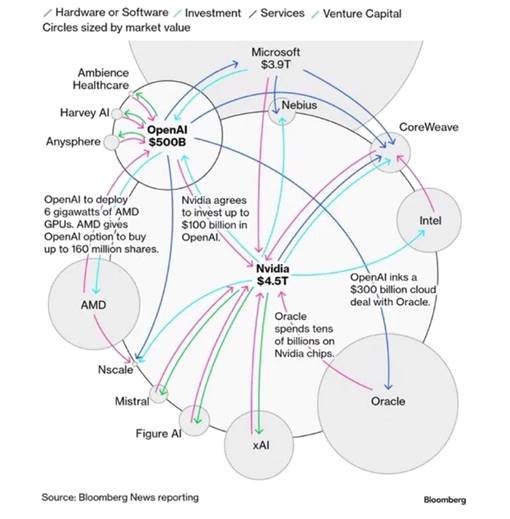
Nebius-Announces-a-Multi-year-Deal-With-Microsoft

Nebius Announces a Multi-year Deal with Microsoft

Nebius Announces a Multi-year Deal with Microsoft

Nebius share jumps after the multi-billion-dollar Microsoft deal triggers a 6.6% boost for rival, CoreWeave.

There have been incessant discussions around what AI is capable of. The thirst and will to build more intelligent, faster, and agile models have observably become insatiable.

But little do they realize the well of computing power that each machine learning application and foundational model actually demands.

Across several countries, there are hundreds of data centers with servers that power your AI systems. And the hunger to unlock AI’s unimaginable potential has led to an unquenching demand for more data centers, and ultimately more computing power.

This is what underpins Microsoft’s latest alliance with Nebius, an Amsterdam-based tech firm.

Here are the tidbits.

The company, spun from the Russian Internet giant Yandex, develops GPUs to train AI models. Under this multi-year contract, the objective is to provide cloud computing power to support AI workload.

Following this arrangement, Microsoft will also receive additional cloud computing capacity. And a consistent supply of AI infrastructure to keep its momentum in the AI race.

On the other hand, the rising demand for Gen AI models can also encourage Microsoft to boost its need for compute power. This could easily result in $17.4 billion deal turning into $19.4 billion one.

It remains a future possibility, as the speculations assert.

For now, Wall Street’s cheers for Nebius sent its shares soaring almost 55% to $99.2 on Tuesday. And if the gains hold, it could add over $7.7 billion to the existing $15.3 billion market capitalization.

Where’s the market headed?

According to McKinsey & Company, the situation is about to turn even more dire- by 2030, data centers will potentially require $6.7 billion to keep pace with the demand for computing power. The race to clasp on to as much data center capacity as possible is on.

And it doesn’t show signs of slowing down in the near future.

With the AI boom widespread across the world, and superpowers such as China and the US competing in the race, the demand is only projected to surge.