
ChatGPT

Is ChatGPT Trading Its Soul for Ad Dollars?

Is ChatGPT Trading Its Soul for Ad Dollars?

OpenAI’s ad pilot just hit a $100 million run rate in six weeks. As ChatGPT leans into ads to fund its future, can it stay the neutral tool we trust?

OpenAI just proved that the “free” in free software always has an expiration date. Within six weeks of launching its U.S. advertising pilot, ChatGPT has already cleared a $100 million annualized revenue mark.

For a company burning through billions in compute costs, this isn’t just a milestone. It is a survival strategy.

The strategy is a classic pivot.

While Sam Altman’s team spent years positioning ChatGPT as a pure, distraction-free utility, the reality of the balance sheet has finally set in. By showing ads to users on the free and “Go” tiers, OpenAI is following the well-worn path of every tech giant before it. They claim these ads are separate from the AI’s logic and won’t influence answers.

But in the world of high-stakes algorithms, the line between “useful suggestion” and “paid placement” can get blurry very fast.

The real nuance is in the price tag. OpenAI is reportedly charging a $60 CPM- triple what Meta asks- and demanding $200,000 minimum commitments. They are selling “premium” attention, betting that a user in the middle of a deep research session is more valuable than someone mindlessly scrolling through a feed.

Yet, early data shows a click-through rate of less than 1%, far below the gold standard of Google Search.

OpenAI is currently walking a tightrope.

They need the cash to keep the lights on for GPT-5 and beyond that. However, they also risk turning into another digital billboard. When the ads become too intrusive, or if the “relevance” starts to feel like manipulation? The very trust that built ChatGPT’s massive user base could evaporate.

We are watching the transition of an oracle into a marketplace. The question is whether we will still value the advice when we know it comes with a sponsor.

Google

Google’s 2029 Warning Asks an Important Question- Is Our Digital Past Compromised?

Google’s 2029 Warning Asks an Important Question- Is Our Digital Past Compromised?

Google’s 2029 quantum breakthrough isn’t just a future threat. If our current encryption is destined to fail, are today’s secrets already compromised?

The tech industry used to treat “Q-Day”- the moment quantum computers break modern encryption- as a problem for the next generation.

Google’s latest assessment has shattered that complacency. By pinpointing 2029 as the year our digital locks might fail, they have moved the finish line from a comfortable distance to our immediate doorstep.

That isn’t merely a warning for future hackers.

The real nuance lies in a strategy known as “harvest now, decrypt later.” Sophisticated actors and intelligence agencies are likely gathering encrypted data today, betting they can store it until quantum processors are ready to spotlight it.

Your medical records, financial transfers, and private messages sent this morning are being archived in high resolution, waiting for a key that is still in the forging process.

Google’s aggressive timeline has rattled the industry. While many experts previously expected this breakthrough in the late 2030s or beyond, Google is already overhauling its internal security models.

By moving Android and its core authentication services to post-quantum cryptography (PQC) now, they are signaling that the era of “safe” classical encryption is effectively over.

The challenge is that updating global infrastructure is a slow and grueling task.

Upgrading a single government database or international banking network can take half a decade.

We have already lost the lead if we wait until 2028 to take this transition seriously. And to put things into perspective- we are currently in a race against a machine that’s still being designed, while trying to protect data that’s probably already stolen.

The real question is no longer about when the walls will fall. It boils down to- how much of our digital history we have already surrendered to the future.

Wikipedia

Wikipedia’s Human Wall Might Be the Last Stand for Authenticity

Wikipedia’s Human Wall Might Be the Last Stand for Authenticity

Wikipedia is officially banning AI-generated content to save its soul. In a digital world of synthetic noise, is being “human-only” a luxury or a losing battle?

Wikipedia has spent two decades as the internet’s most successful “trust me, bro” experiment. It works because, for all our flaws, we care about being right. But the site just made a massive gamble by banning AI-generated content.

Wikipedia is choosing to stay slow, stubborn, and strictly biological- especially in an era where silicon can churn out a million words in seconds.

The logic is simple: LLMs don’t actually know things. They predict the next most likely word in a sequence. That makes them world-class liars.

It does so with the confidence of a tenured professor when an AI hallucinates a fake historical event. For a platform built on the bedrock of verifiability? Allowing AI to write entries is akin to inviting a high-speed rumor mill to manage a library.

The Reality Check

The ban is a noble attempt to avoid a “dead internet” feedback loop. If AI begins learning from AI-generated Wikipedia articles, the truth starts to degrade like a photocopy of a photocopy.

But there is a glaring practical problem-

AI detectors are known to be unreliable. And the tech is now getting better at mimicking human quirks each day.

Why It Should Matter

It isn’t just about blocking bots. It is a fundamental shift in how we value information.

By banning AI, Wikipedia is positioning itself as the organic section of the information grocery store. It is betting that as the rest of the web becomes a soup of synthetic text, users will crave the friction and accountability that only comes from a human author.

The risk is that humans cannot keep up with the sheer volume of global events.

We are watching a digital sanctuary being built. Whether it remains a source of truth or becomes a curated museum of a slower age is the real question. If the wall holds, Wikipedia might be the last place on earth where you know for sure that a person is behind the screen.

Is Big Tech Finally Out of Excuses? That's the $375 Million Question

Is Big Tech Finally Out of Excuses? That’s the $375 Million Question

Is Big Tech Finally Out of Excuses? That’s the $375 Million Question

Jury verdicts against Meta and Google just bypassed the Section 230 shield. Is the “addictive design” legal strategy the beginning of the end for Big Tech?

For decades, Section 230 has been the ultimate get-out-of-jail-free card for Silicon Valley. It was a simple deal: platforms aren’t responsible for what users post.

But two recent jury verdicts in California and New Mexico just flipped the script, and the implications are massive. By focusing on “product design” rather than “content,” plaintiffs have finally found a way to pierce the digital armor.

In Los Angeles, jurors awarded $6 million to a young woman who argued that the very architecture of Instagram and YouTube was designed to hook her at the expense of her mental health. Meanwhile, a New Mexico jury slapped Meta with a $375 million penalty for misleading the public about child safety.

The common thread here isn’t what’s said on the apps, but how the apps themselves are designed.

This distinction is the “Big Tobacco” moment for technology.

If a car has a faulty ignition, the manufacturer is liable; if a social media feed is engineered to be addictive, why should the rules be different?

The industry’s defense has always been that they are mere conduits for speech. These verdicts suggest that juries see them as something else entirely: manufacturers of a potent, sometimes defective, digital product.

Meta and Google will almost certainly appeal, leaning on the broad protections of federal law. But the tide is turning. These aren’t just isolated losses; they are bellwethers for thousands of pending cases.

If higher courts uphold the idea that “design” is separate from “content,” the liability shield won’t just have a crack- it might shatter. The era of tech companies operating as untouchable architects of our social fabric is facing its most serious reality check yet.

Claude

Is Claude Code’s “Auto-Mode” the End of the Scripted Engineer in AI?

Is Claude Code’s “Auto-Mode” the End of the Scripted Engineer in AI?

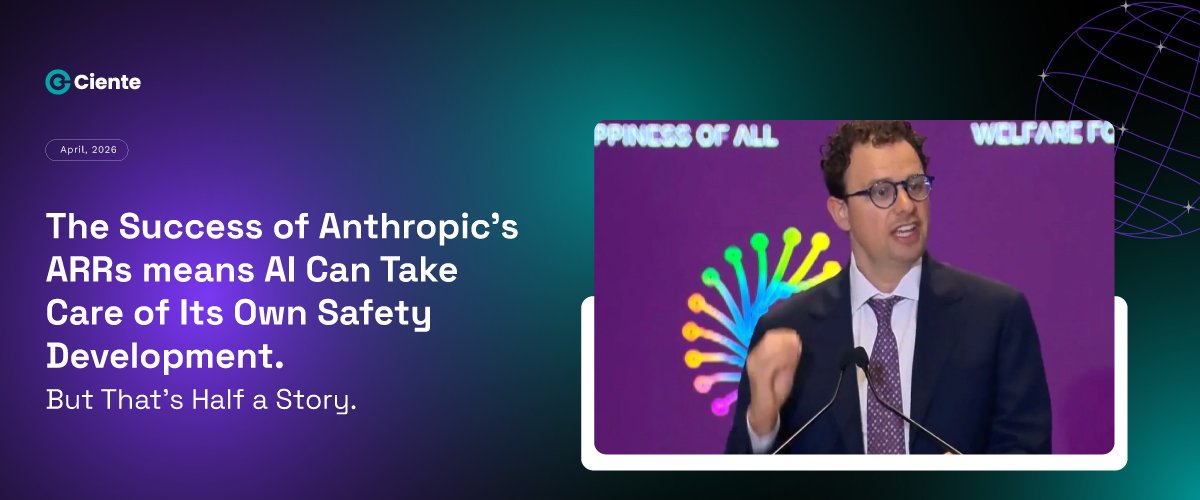
Claude Code’s new Auto-mode suggests a future where developers stop writing syntax and start managing intent. Is the craft evolving or simply disappearing?

Anthropic recently quietly dropped a feature for Claude Code called “Auto-mode,” and it feels like a pivot point for how we define “programming.”

Most AI coding tools act like high-end autocorrect- they wait for you to stumble before offering a suggestion. But Auto-mode doesn’t wait. This level of agency allows Claude Code to navigate technical complexities across multiple files with minimal handholding.

And the most normal reaction to this has been a mix of awe and anxiety.

We are pivoting from a world of copilots to agents. And the developer’s role is shifting from that of a bricklayer to an architect in this new setup.

You aren’t worrying about whether you closed a bracket. You’re worrying about whether the system’s logic aligns with the product’s goals. It’s an efficiency gain, certainly, but it also creates a massive abstraction layer between the engineer and the machine.

There is a subtle danger in this convenience.

If the AI handles the “how” of engineering, we risk losing the “why.”

Junior developers might bypass the fundamental struggles that build deep technical intuition. However, if we view this through a different lens, Auto-mode removes the friction of boilerplate and configuration hell. It lets engineers focus on solving actual problems rather than fighting their environment.

We are entering an era where “coding” is no longer the primary skill of a software engineer.

The new elite skill is clarity of thought. If you can define a problem with precision, the tool will build the solution.

The question isn’t whether the AI can write the code, and it clearly can. The question is whether we know exactly what we’re asking it to build.

Retail Has New Gatekeepers: Google and OpenAI Move to Monopolize the Buy Button

Retail Has New Gatekeepers: Google and OpenAI Move to Monopolize the Buy Button

Retail Has New Gatekeepers: Google and OpenAI Move to Monopolize the Buy Button

Silicon Valley is no longer satisfied with just showing ads; Google and OpenAI now want to be the ones who actually pull the trigger on your purchases.

Google and OpenAI are currently locked in a race to determine who controls the next iteration of the digital wallet. While the tech industry often obsesses over AI writing poetry or fixing broken code, the most immediate shift is happening in how we buy groceries and gear.

Both companies are rolling out features that move us away from traditional searching and toward a model of passive consumption. It is a fundamental pivot that turns the internet from a library into a high-stakes concierge service.

Google has the structural advantage with its Merchant Center, a massive database tracking billions of products across the globe. OpenAI is countering by transforming ChatGPT into an agent that can reason through complex shopping lists.

It’s the dawn of agentic commerce.

Instead of comparing three types of hiking boots across five websites, you simply tell an AI your shoe size and your destination. The machine does the filtering, price matching, and logistics.

The real tension lies in what this does to the open market.

In a standard retail environment, a dozen brands might compete for your eye. You only see what the algorithm chooses to surface in an AI-first world. That creates a winner-take-all scenario where companies no longer compete for consumer loyalty but for the preference of a single black box.

The joy of discovery is being replaced by a curated feedback loop that values speed over variety.

There is also the question of intent.

By managing our shopping, these platforms gain unprecedented insight into our personal finances and domestic habits. They aren’t finding deals for us, but are becoming a central figure by embedding themselves within our decision-making process.

The convenience of automated shopping is undeniable. Yet it’s forcing us to wonder if we are trading our agency for the sake of a shorter to-do list.