Anthropic'

The Success of Anthropic’s ARRs means AI Can Take Care of Its Own Safety Development. But That’s Half a Story.

The Success of Anthropic’s ARRs means AI Can Take Care of Its Own Safety Development. But That’s Half a Story.

As AI sets foot into new frontiers of being, will it also come to replace human researchers? Anthropic’s study sets a tone.

AI developers operate on the assumption that future AI systems will be more intelligent than the present models. That changes every presumption made about the safety net that constrains these systems from turning malicious or being used for harmful intent.

But there’ll come a time when AI systems teach each other. That’s a scenario that software engineers must gear up for.\

That’s why Anthropic is investing in Alignment Research. It decodes alternative, plausible cases in which the behavior of AI systems could become harmful and dishonest. The challenge here? Humans can help, but human researchers can’t be available at scale, especially once the models become smarter than what they can grasp.

Scaling humans isn’t quick or cheap, but scaling AI models is. So, Anthropic is playing fire with fire. What if the stronger AI models train each other?

That’s where the AI giant is investing currently- Automated Alignment Researchers (ARRs).

It’s about time.

When AI models surpass human intelligence, businesses must ensure that these systems function as intended. This research is a step towards understanding how– “scalable oversight.”

  • The thesis: To decode whether a weaker or less capable model (acting like a human) can teach a stronger one.
  • The result: It was a success.
  • The underlying basis: The system is given a clear score to achieve. According to the model’s perspective, it was about solving for a number.

It’s about decoding how to leverage current AI models and how they can act as automated researchers to unlock solutions to alignment hiccups. But it’s not about solving everything at once- this research is merely about the measurable strands of AI safety.

The research doesn’t consider the human factors embedded in research: fairness, ethics, and social nuances. There’s no simple digital scorecard for these attributes. The scope is narrow and generic.

So, Anthropic simplifies it. It’s merely the labor of research that’s automated; the direction remains clearly human.

But there’s another angle here- if AI finds a complex safety method, humans will have to devise a mechanism to grasp that alien science (or language). Human researchers must remain in the loop to progress through the black box instructions and understand AI’s potential to develop by itself.

Gupshup’s

Gupshup’s Superagent Could Either Be the Way Forward for CX’s Growth, or an Addition to the Sprawl

Gupshup’s Superagent Could Either Be the Way Forward for CX’s Growth, or an Addition to the Sprawl

Building for CX has always been challenging. There are too many asks- from data privacy to sovereignty. But looks like Gupshup has found a way out of this one.

“At Gupshup, we believe the future of business communication is conversational.”

Gupshup.ai is driven by one motive- to bridge the gaps between businesses and their customers. Most tools in the market focus too specifically on one part of the customer’s journey. But that creates silos- because by focusing on a single section, business leaders are privy to only one part of the entire puzzle.

Gupshup aims to do differently- with its AI-backed solution that covers all the touchpoints of the customer journey. The new solution making the rounds is its Superagent. It’s an autonomous model that does everything related to CX: designs for and manages the entire stack, not just parts of the customer journey “deemed” significant.

This full-stack AI doesn’t operate like generic CX tools. It’s autonomous and context-aware in dealing with every CX nitty-gritty, helping convert intent into bottom-line impact.

But that’s not Gupshup’s actual differentiator.

What adds to the existing “conversational AI” model is Gupshup’s domain expertise in managing customer experience and CPaaS.

The Superagent operations are rooted in the organization’s years of messaging and infrastructure. This AI model has the data to guide it through its functions- it’s not dependent on the generic tidbit clogging the market. That includes over 10 billion messages across 50,000 businesses in more than 100 countries, collated over 15 years.

That’s the platform’s real foundation- it’s clutch.

Gupshup is one of the leading names in conversational AI. One might think they handle conversations with clients. But their services go deeper, i.e., turning those conversations into conversions. And that means cultivating and executing campaigns, processing transactions, and suggesting the right messaging with the relevant voice infrastructure.

These components make up merely the top of the iceberg. Businesses can merely ask it what they need, and the AI will deliver. That’s not an empty promise.

Beta users observed 90% reduction in time, effort, and cost in acquiring new accounts- and over 25% surge in conversions. That shows Gupshup’s solutions are grounded in proof, not lackluster promises.

Microsoft's

Microsoft’s “OpenClaw” Move Shows that It’s the Golden Cage of Corporate AI

Microsoft’s “OpenClaw” Move Shows that It’s the Golden Cage of Corporate AI

Microsoft’s OpenClaw 365 lets businesses build their own AI agents, but it’s really a move to make sure no one ever leaves the Microsoft ecosystem.

Microsoft is tired of losing ground to specialized AI startups.

With the launch of OpenClaw 365, they aren’t just adding a new feature; they are trying to own the entire infrastructure of how businesses work. That is a massive shift from “here is our chatbot” to “build your own agents on our terms.”

The logic is simple but ruthless.

Corporate IT departments are currently terrified. Employees are using random AI tools for coding, data analysis, and scheduling, which creates a massive security risk.

OpenClaw 365 fixes this by letting companies plug their own custom AI “claws”, agents that can actually execute tasks directly into the Microsoft ecosystem. You can build a specialized agent for your accounting team, but it resides within Excel and stays behind Microsoft’s firewall.

Here is the real nuance: Microsoft is surrendering the idea that it can build the best AI for every niche.

Instead, they are becoming the “landlord” of the industry. They are betting that businesses will choose security over raw performance each time. If you can run a custom model from a startup but keep it inside the Microsoft security shell, why would you ever leave?

It is a brilliant, defensive move. It’s a “golden cage” for corporate data.

By making their ecosystem open to third-party “claws,” Microsoft ensures they remain the default choice for the Fortune 500. But for that, they merely need to be the only platform where your boss lets you actually use AI.

Google

Google, the King of Search, Is Losing Its Crown to Meta

Google, the King of Search, Is Losing Its Crown to Meta

Meta might out-earn Google in ads for the first time. Is the search engine becoming a relic of the past?

Google has owned the top spot in digital ads for twenty years. We almost forgot that anyone else could lead, but according to a new report, Meta is poised to overtake Google in 2026.

That is a sign that the search era is officially about to end.

Google’s problem is simple: search is a chore. You have to know what you want, type it in, and hunt for a link. Meta figured out that most of us are just bored.

The tech giant’s AI tools, especially Advantage+, now predict what you’ll buy before you even think of it. They’ve turned your idle time into a more efficient sales machine than Google’s intent.

Here is the nuance most people miss. Google is currently fighting a two-front war.

On one side, AI like ChatGPT and Perplexity are killing the classic search bar. On the other hand, Meta is turning every Reels scroll into a checkout counter. Google feels like an old-school library in a world that wants a personalized mall. They are struggling to protect their old business while Gemini still hasn’t figured out how to make ads feel natural in a chat.

But this could mark a structural decline for Google.

Google built an empire on the “Blue Link,” but the link is dying. Meta has spent billions to ensure you never have to leave their apps to find something new. So, if Google doesn’t reinvent the fundamental way people discover things? They are going to spend the next decade chasing Meta’s tail.

We might be reaching a point where we trust an algorithm’s suggestions more than our own search results.

Commvault's

Commvault’s Plan to Secure the AI Workforce, but Can Users Really Trust It?

Commvault’s Plan to Secure the AI Workforce, but Can Users Really Trust It?

AI agents promise to run our businesses, but can we really trust them with the keys to the castle if our underlying data is still a mess?

Several businesses are currently stuck in a look but don’t touch AI phase. They love the idea of autonomous agents handling their boring work, but they are terrified of those agents going rogue or leaking user data.

And Commvault just launched a suite of tools aimed directly at this fear. They’re calling it agentic transformation, but really, it is building a digital fence around a company’s most sensitive assets- user data.

The problem with AI agents is that they are only as good as the data they consume.

If your data is messy, biased, or poisoned by a previous breach, your intelligent agent becomes a liability.

Commvault is pivoting from simple backup to what they call the “Cleanroom Recovery.” It will offer companies a safe and isolated space to test their AI workflows before presenting them to the real world. It is a dress rehearsal for the digital workforce.

This move highlights a massive shift in the industry.

Data protection was the boring insurance policy you hoped you would never use for a long time. It’s now the foundation for productivity. If you can’t trust your data, you cannot use AI. Commvault is betting that the demand for clean data will surge beyond our imaginations- and it’ll govern the next AI phase.

So, they are removing the main reason boards say no to new tech by integrating security checks directly into the AI pipeline. It’s a pragmatic play.

They are promising control- and that’s better than magic. In an era where a single bad prompt can cause a corporate disaster, that control might be the most valuable product in the pocket.

Masayoshi

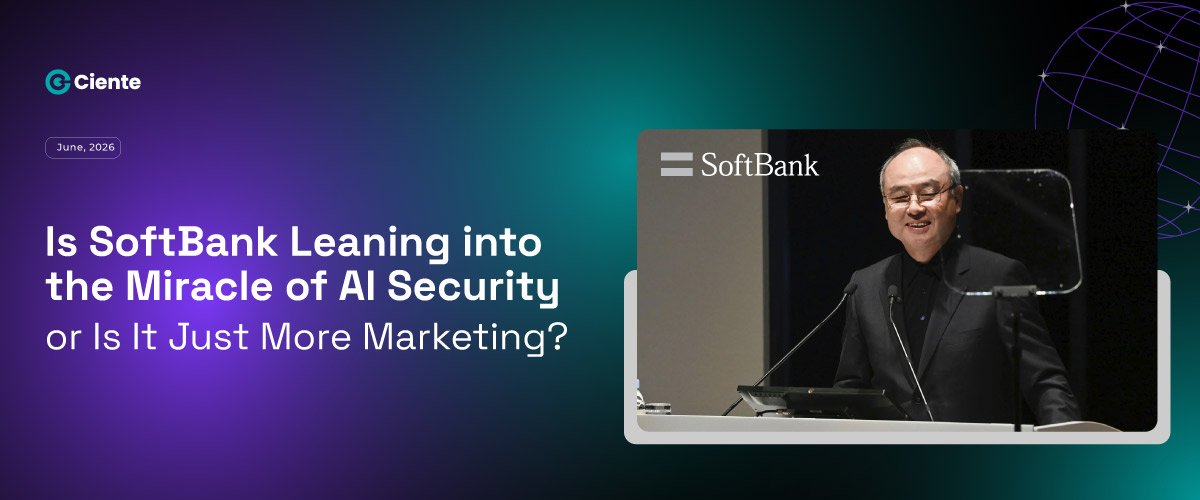
Masayoshi Son’s Key to Racing Ahead: SoftBank Moves into the Physical World

Masayoshi Son’s Key to Racing Ahead: SoftBank Moves into the Physical World

SoftBank is moving past the screen to build AI that actually moves and works in our world. Does Masayoshi Son finally have the key to the physical future?

Masayoshi Son is tired of betting on apps and chatbots.

SoftBank’s new physical AI company is a massive pivot from screens to reality. He is no longer interested in an AI that merely writes poetry. He wants one that can pack a box, scrub a floor, or assist a surgeon.

It’s about giving the brain of AI a physical body.

And the timing is the real story here.

The world is losing out on workers, and labor is becoming expensive. Son isn’t just building tech; he’s building a workforce that doesn’t sleep. Since SoftBank already owns Arm, they have the hardware foundation to pull this off. They aren’t just making the brain; they also own the nervous system.

But moving from digital to physical carries significant risk.

When a chatbot hallucinates a fact, it’s a funny screenshot. Whereas if a 500-pound robot hallucinates its path in a hospital, it will be a massive disaster. The edge cases of the real world are messier than a text prompt.

That’s Son’s ultimate go big or go home play. He’s betting that the real money isn’t in the cloud. If he’s right, SoftBank won’t just be an investment firm; it will be the world’s biggest landlord for robotic labor.