
Microsoft

Microsoft’s New Scout Assistant Reveals Where the AI Race Is Actually Going

Microsoft’s New Scout Assistant Reveals Where the AI Race Is Actually Going

Microsoft has launched Scout, an always-on AI assistant built on OpenClaw, but the bigger story is the industry’s growing shift from chatbots to digital coworkers.

For the past three years, AI companies have been competing on a fairly simple premise.

Build a smarter model.

The assumption was that better reasoning, larger context windows, and more capabilities would eventually unlock the future everyone was promising.

Microsoft’s new Scout assistant suggests the industry is starting to think differently. Scout isn’t another chatbot or another Copilot feature. It’s designed as an always-on personal agent that will gradually reiterate how a person works over time. In Microsoft’s vision? It turns into a persistent digital coworker.

That distinction matters.

The AI industry’s biggest challenge was never getting people to ask questions. ChatGPT solved that. The harder problem is getting AI to participate in work without constantly waiting for instructions.

That’s what makes OpenClaw interesting, and why nearly every major technology company suddenly seems fascinated by personal agents. OpenClaw popularized the idea that AI shouldn’t simply respond to requests. It should observe context, maintain memory, and act across multiple systems on a user’s behalf.

Microsoft is now trying to make it enterprise-ready.

The company has wrapped Scout in Microsoft 365, connecting it to the entire ecosystem and organizational policies. And the pitch is straightforward: if personal agents are inevitable, enterprises will want one that understands their standards from day one.

The timing is hardly accidental.

AI models are becoming increasingly similar in capability. The next competitive battleground may not be the model itself but the system surrounding it. Memory, permissions, workflows, integrations, and context are becoming just as important as raw intelligence. Researchers have already begun describing this shift as a move away from prompt engineering and toward the infrastructure that enables autonomous agents to operate reliably.

For enterprise buyers, Scout raises a more practical question.

How much autonomy are you willing to give AI if it evolves from software you use into software that acts on your behalf?

The productivity gains sound compelling. A system that manages and coordinates work across applications could eliminate a surprising amount of administrative overhead.

But the conversation changes the moment an AI starts making decisions. Trust, governance, oversight, and accountability are becoming as important as capability.

That’s why Scout feels significant.

Microsoft isn’t launching another assistant.

It’s betting that the future of workplace AI won’t be a chatbot waiting for prompts.

It will be an employee who never logs off.

Google

Google’s New Multimodal Model, the Gemma 4 12B, Challenges One of AI’s Biggest Assumptions

Google’s New Multimodal Model, the Gemma 4 12B, Challenges One of AI’s Biggest Assumptions

Google’s latest Gemma model brings multimodal AI to laptops with just 16GB of memory. And that’s raising questions about the future of AI with respect to cloud.

The AI industry has been obsessed with scale- especially in the last few years.

Every breakthrough seemed to require more compute, more GPUs, data centers, and budgets. It proved something simple: better AI demanded more infrastructure.

Google’s latest Gemma release quietly challenges that idea.

The company has introduced Gemma 4 12B, a multimodal model capable of handling different formats while running on a laptop with just 16GB of memory. That’s a massive technical achievement.

Most conversations around AI still assume intelligence resides in distant data centers. You type a prompt on your device, but the actual processing is handled in a distant data center. The cloud has become so central to AI that many treat it as a necessity.

Gemma suggests that the assumption deserves another look.

The benefits go beyond convenience.

Latency, costs, privacy, and governance all have become critical to tech conversations today with AI adoption. Every request sent to the cloud introduces dependencies. Every AI workflow relies on connectivity, compute availability, and someone else’s infrastructure. Running capable models locally doesn’t eliminate those concerns, but changes the overall equation for enterprises.

Organizations have been embracing AI while simultaneously becoming more cautious about where their sensitive information travels. The promise of local AI has always been appealing. The challenge was that meaningful capabilities usually demanded hardware that most users didn’t have.

Google is betting that the gap is starting to close.

That doesn’t mean the cloud is going away. The largest models will reside in data centers because certain workloads require enormous amounts of compute. But the future increasingly looks hybrid. The toughest reasoning tasks happen remotely, while everyday AI runs closer to the user.

If that shift happens, announcements like Gemma may end up mattering more than another benchmark result.

Because the most important question in AI may no longer be how powerful a model can become.

It may be how much intelligence can fit into the devices people already own.

Anthropic

Anthropic’s IPO Filing Forces AI’s Biggest Question into the Open

Anthropic’s IPO Filing Forces AI’s Biggest Question into the Open

Anthropic has confidentially filed for a US IPO, becoming the first major AI lab to take the AI boom from private capital to public markets.

Anthropic has confidentially filed for a US IPO. The entire focus is now on what happens next.

The AI industry has operated on belief and promises. Investors and companies are spending billions because they fear missing out. Every funding round seemed to push valuations higher, even though the industry’s economics remained largely untested.

Anthropic’s IPO changes the conversation.

The company behind Claude isn’t just asking investors to believe AI will change the world. It’s asking public markets to decide what that future is actually worth.

That is a much harder sell.

Private markets and public markets reward different things. Venture investors can spend years chasing potential. Public investors eventually want evidence. They want a short path to profitability.

The challenge for Anthropic? AI remains one of the most expensive tech businesses.

Training models costs billions. Running them costs billions more. Competition isn’t slowing down, which means spending isn’t slowing down either. Every major AI company is effectively trapped in an arms race where standing still is not an option.

That’s why the timing feels important.

The AI boom has largely been measured through funding rounds and valuations. Those numbers tell us what investors think AI could become. An IPO begins to reveal what investors think AI businesses are worth today.

And that distinction matters.

Because beneath all the excitement around agents, reasoning models, and enterprise adoption sits a question the industry has largely avoided: Can AI become as profitable as the market expects it to be?

Anthropic may become the first company forced to answer it.

What Does That Mean For Tech Buyers?

For enterprise buyers, the IPO filing is another sign that the AI market is entering a more mature phase. The conversation is slowly moving beyond model benchmarks and feature launches. Financial durability is becoming part of the equation.

Who can sustain the infrastructure costs? Who can continue investing? Who can remain competitive five years from now?

Those questions don’t disappear after an IPO. They become harder to ignore.

Anthropic’s filing isn’t just another AI milestone. It’s the first real attempt to convert the industry’s promise into something public markets can measure.

And that may be the most important test yet for the AI sector.

Gemini

Gemini Spark Shows Why the Future of AI Depends on Trust

Gemini Spark Shows Why the Future of AI Depends on Trust

Google’s new AI agent, Gemini Spark, can handle surprisingly complex tasks. The catch is that it only works because it knows so much about you.

Google has spent years collecting pieces of your digital life.

Your emails, calendar, documents, photos, and searches.

Those products existed separately for most of their time. Gmail was Gmail. Drive was Drive. Photos were Photos. Gemini Spark changes that.

Google’s new AI agent can pull information from across its ecosystem and use that context to complete tasks on your behalf. It can carry out tasks with surprisingly little supervision. And it performed almost exactly as Google’s polished demos suggested in some cases.

That’s impressive. It’s also the entire point.

AI companies have competed largely on model intelligence for the past two years. Who has the smartest chatbot? Who has the best reasoning model? Who can generate the most convincing response?

Gemini Spark suggests the next phase of competition may look very different.

The advantage may not belong to the company with the smartest model. It may belong to the company with the deepest understanding of your life.

That’s where Google enters this race with a head start that few competitors can match.

The company already sits on years of emails, calendars, documents, search history, and behavioral signals. Spark isn’t powerful despite that data. It’s powerful because of it. Many of the agent’s strongest moments came from its ability to connect information spread across Google’s ecosystem and turn it into useful actions.

And that’s where things get complicated.

Because every breakthrough Spark demonstrates seems to create a corresponding trust question.

The more useful the agent becomes, the more access it needs. The more context it gathers, the more capable it appears. The line between convenience and surveillance starts looking uncomfortably thin. Even reviewers who were impressed by Spark’s capabilities described moments that felt invasive rather than empowering.

This is likely the conversation that matters most for tech buyers.

The industry has spent the last year talking about model benchmarks and agent capabilities. Those discussions aren’t going away, but they may no longer be the deciding factor.

Trust, governance, and data access are turning into competitive advantages. Because the future of AI agents is about which company users are willing to trust with enough information to complete it well.

Gemini Spark feels like the clearest example of that future yet.

And it shows that AI’s next battle may have less to do with intelligence and more to do with permission.

NVIDIA

NVIDIA’s Next Bet is Reinventing Windows with RTX Spark

NVIDIA’s Next Bet is Reinventing Windows with RTX Spark

NVIDIA is stepping into the consumer laptops space- and its latest chip, RTX Spark, is the chip manufacturer’s real shot at succeeding here.

NVIDIA has announced RTX Spark, its first real shot at becoming a PC chip company, and the message is impossible to miss: the company no longer wants to power the future of computing. It wants to own it.

You bought an Intel, AMD, or Qualcomm-powered machine, and NVIDIA supplied the graphics muscle. RTX Spark changes that equation. Now NVIDIA is building the entire brain. The new chip is a superchip- one that amalgamates GPU, CPU, and AI processing in a single package.

The new Arm-based chip combines a 20-core CPU, a Blackwell GPU with up to 6,144 CUDA cores, similar to 128GB of unified memory inside thin laptops and compact desktops. That’s a ridiculous amount of hardware for a machine that isn’t supposed to live under a desk.

NVIDIA is betting the future PC won’t revolve around apps. It’ll revolve around AI agents.

Listen closely to how Jensen Huang talks about RTX Spark. His pitch captured everything: AI- local AI models, personal agents, voice-driven computing, and AI workloads that run directly on your machine rather than bouncing everything through the cloud.

Why Now?

NVIDIA is making a massive bet on a future that the industry keeps describing as inevitable but hasn’t been proven yet. Most people still open browsers, click apps, and type documents. They aren’t running 120-billion-parameter models on a laptop during lunch breaks.

There’s also the Windows-on-Arm question.

Microsoft has spent years trying to make ARM laptops feel mainstream. Progress has been real, but compatibility concerns still follow the platform around like a shadow. RTX Spark supports major creative apps and even anti-cheat-protected games, which suggests it knows precisely where skepticism lives.

At the same time, dismissing RTX Spark would be a mistake.

NVIDIA’s Competitive Edge

NVIDIA has something Intel, AMD, and even Qualcomm don’t entirely entail right now: control over the AI ecosystem. Developers already build around CUDA. AI companies already optimize for NVIDIA hardware. That advantage doesn’t magically disappear when the company masters laptops.

But through all the AI-related fatigue, do people actually want the AI-first computer NVIDIA keeps describing?

Because RTX Spark is still only selling a future as of now.

What Changes for Tech Buyers?

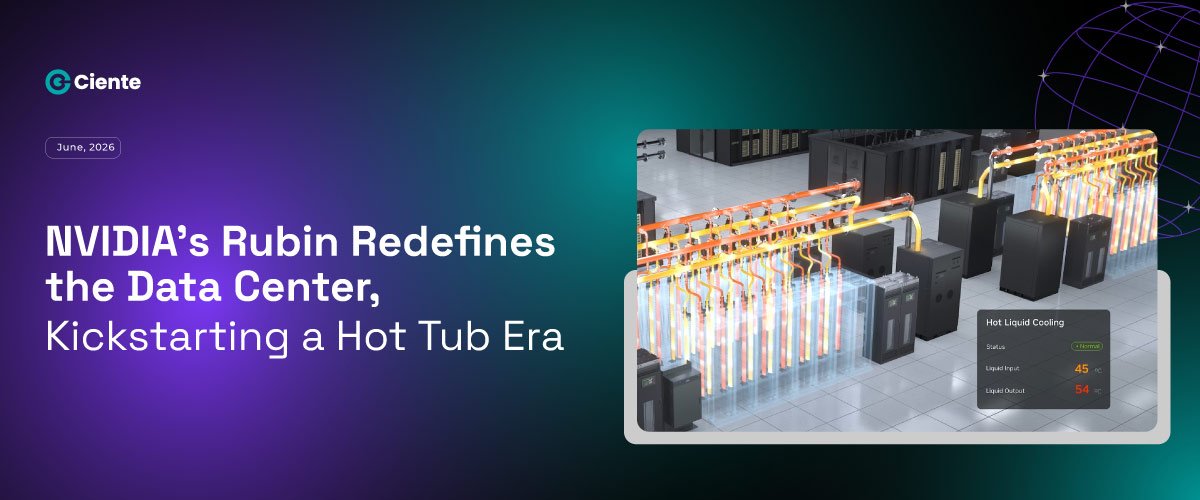
With the introduction of RTX Spark, the tech buyers will have to engage in newer conversations with their vendors. A lot of the focus in the past year has hinged on a cloud-only strategy- but Huang has shifted that.

Vendors and buyers alike should be ready for a hybrid-ready future- one where the most pressing question is if their products can utilize local processing to complete AI tasks. Either it should support local inferencing or adjust according to the user’s hardware capabilities.

And the other question includes, of course, data privacy and security. In this scenario, where AI workloads move to the edge, compliance becomes simpler. But not for tech decision-makers.

When push comes to shove, questions of data residency will take priority. Because like any other tech, the foundations will remain new, and trust seems wobbly with respect to all things AI. Whether all the data will be processed locally and which ones are sent to the cloud remains unclear. Additionally, will there be an option to process all sensitive workloads locally?

Even when every nitty-gritty seems simpler on paper, the checklist for tech buyers remains the same- hardware capability, performance, security, and ROI.

These will be the fundamental asks in the AI-everything era, if its edge remains.

Microsoft

Microsoft’s AI Ambitions Are Running into an Old Problem: Antitrust

Microsoft’s AI Ambitions Are Running into an Old Problem: Antitrust

The FTC seems to be expanding its scrutiny of Microsoft, raising questions about the power one company should have across the enterprise tech stack.

Microsoft has spent the past two years positioning itself as the adult in the AI room.

While rivals chased headlines and consumer hype, Microsoft quietly embedded AI into the software businesses already use every day. Copilot landed in Office. Azure became a preferred home for AI workloads. OpenAI became deeply tied to Microsoft’s infrastructure.

Now that the strategy is attracting attention from a familiar source: regulators.

According to reports, the US Federal Trade Commission is expanding an antitrust investigation into Microsoft’s cloud, software licensing, cybersecurity, and AI businesses. The concern isn’t a single product. It’s the growing influence Microsoft holds across multiple layers of enterprise technology.

And that’s what makes this investigation more significant than a standard regulatory review.

It isn’t really about AI.

It’s about whether Microsoft’s AI advantage is being amplified by decades of dominance in adjacent markets.

Why Now?

The timing isn’t accidental.

The AI boom has transformed cloud infrastructure into one of the most important battlegrounds in technology. Companies don’t just buy software anymore. They buy cloud capacity, security tools, productivity suites, AI services, and increasingly, all of them from the same vendor.

Microsoft sits at the center of that ecosystem.

A company already using Windows, Microsoft 365, Teams, Defender, and Azure faces a very different purchasing decision than one starting from scratch. Regulators want to know whether that ecosystem creates advantages competitors can’t match.

That’s not a new question.

Microsoft has spent more than two decades trying to escape the shadow of its historic antitrust battles. The difference now is that AI has given regulators a new lens through which to examine old concerns.

The Bigger Picture

The investigation also reflects a broader shift in how governments view AI competition.

Regulators focused on consumer platforms such as search engines and social media for years. But today, the attention is moving toward infrastructure providers.

That’s where real power may be accumulating.

The companies controlling cloud platforms, AI models, data centers, and enterprise software increasingly shape how businesses adopt AI in the first place.

Microsoft isn’t alone here. Amazon, Google, and Nvidia are facing similar scrutiny. But Microsoft’s position is unique because it operates across nearly every layer of the enterprise stack.

What Changes for Tech Buyers?

Probably not much for now.

The investigation isn’t likely to alter procurement decisions overnight. Enterprises will continue choosing vendors based on performance, security, compliance, and cost. But it does introduce a new consideration.

Many organizations are trying to consolidate vendors to reduce complexity. Microsoft’s ecosystem makes that attractive. One provider. One contract. One AI strategy.

The FTC’s concerns highlight the other side of that equation. The more technology companies consolidate under a single vendor, the harder it becomes to switch later. That’s the tension at the heart of this case.

Microsoft’s integrated approach has become one of its biggest strengths in the AI era. The question regulators are asking is whether it has become too effective.

And as AI becomes inseparable from enterprise software, that question is only going to get louder.