RingCentral has acquired CommunityWFM.

RingCentral has acquired CommunityWFM.

RingCentral has acquired CommunityWFM.

RingCentral, a global leader in AI-powered business communications, has just acquired CommunityWFM.

This acquisition comes at the right time in tech history as demand for AI-powered WFM has risen sharply. As hybrid and remote workforces become the norm, organizations have been able to extract talent from around the globe.

However, managing them is quite different. With this move, RingCentral tackles two facets and enables global workforce management.

These are:

  1. Strengthen their global business communications.
  2. Use their AI capabilities to improve CommunityWFM’s contact centers.

RingCentral has tried to enter the CC-a-a-S but couldn’t because of a native WFM system. This acquisition will help them bridge this gap.

“By providing CommunityWFM’s AI-driven workforce management capabilities together with our AI-first RingCX platform, we’re giving businesses the complete set of tools to optimize operations while empowering their people—creating the foundation for superior agent performance and effortless customer experiences.” — Kira Makagon, President & COO, RingCentral.

This quote makes it clear that RingCentral wants to become a one-stop shop for businesses looking to optimize operations. Mix AI-Powered systems in this, and you get a powerful tool that can empower businesses.

The Benefits?

  1. Operations and leadership can benefit from better forecasting, less manual work, and better real-time adjustments in schedules.
  2. Customer experience (CX) may improve as staffing better matches demand (reduced wait times, fewer dropped calls, etc.).

But what are the things to watch out for?

  1. How RingCentral integrates CommunityWFM: technology, UI/UX changes, rollout timelines.
  2. Whether pricing tiers or feature bundles change over time.
  3. How competitors respond ‒ will other CCaaS / UCaaS vendors accelerate building/acquiring WFM?
  4. Feedback from actual users/employees: Does the promised benefit hold up in real usage?

As the global workforce transforms, RingCentral will find itself leading the pack. However, as with all things tech, only time will tell.
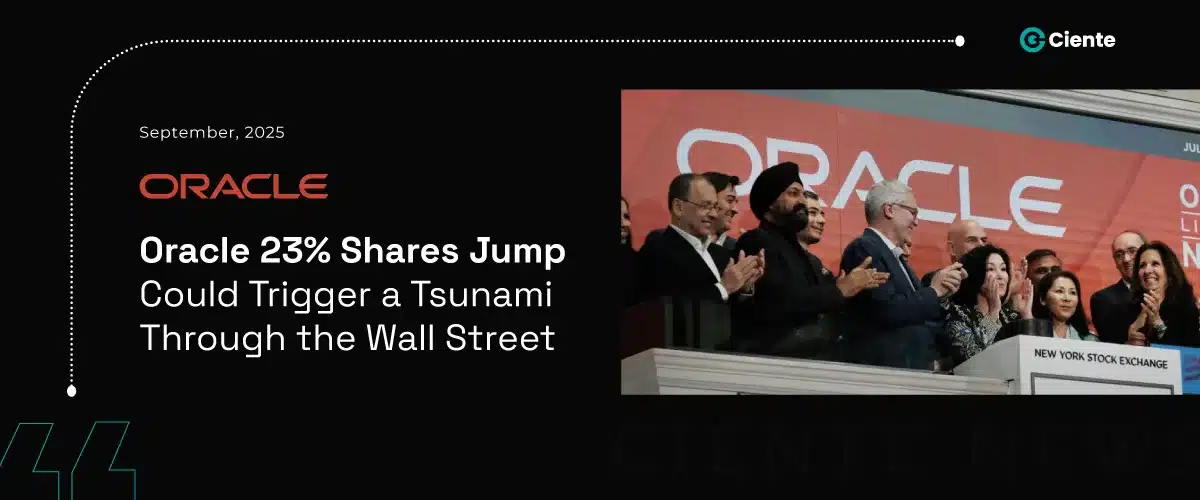
Oracle's 23% Shares Jump Could Trigger a Tsunami on the Wall Street.

Oracle Shares Jump 23%, Shaking Up Wall Street – Ciente

Oracle Shares Jump 23%, Shaking Up Wall Street – Ciente

Could Larry Ellison, the co-founder of Oracle, challenge Elon Musk for the title of the wealthiest man after Oracle’s share jump?

The AI cloud business is skyrocketing, and it has no intentions of slowing down. The global increase in cloud demand has triggered a need for cloud infrastructure. That’s quite obvious.

And amidst this demand, Oracle has bagged not just one, but four multi-billion-dollar deals with three customers in the first quarter. Even OpenAI has agreed to purchase computing capacity from Oracle over the next five years.

This feat has triggered the company to reach a valuation of $1 billion.

Consequently, the rapidly increasing cloud demand has shifted the tech company’s own forecast from a 70% cloud growth to 77%. In line with this, Oracle is also predicted to complete sales worth $18 billion by the end of 2025. This could total its sales for the next four years to $144 billion.

This has kick-started a domino effect.

Oracle’s announcement of these massive cloud deals and sales forecast influenced its shares to soar 23%- a 12% growth in revenue totaling $14.93 billion. Its stocks have gained tremendous momentum, outpacing even the Magnificent Seven stocks.

But this rally had another significant impact-

Its market value leaped from $234 billion to approximately $913 billion. But its Chairman and co-founder, Ellison, witnessed his net worth rise by $100 billion to over $392.6 billion. With Musk’s net worth currently at $439.9 billion, it was a close call. And at one point, Ellison was ahead, too. However, as the market closed on Wednesday, Musk regained his leading position.

Where’s Oracle headed?

According to stakeholders, Oracle is gearing up to play a central role in similar massive deals with Microsoft, Amazon, and Google. Additionally, its role in OpenAI’s Stargate Project and partnership with Softbank will only offer a substantial boost.

As investors and business leaders continue to bet heavily on AI infrastructure, it’s expected that Oracle’s RPO will even surpass $500 billion. It’s created a ripple effect on the already rekindled AI boom.

Oracle is riding the waves of AI demand. And its multi-cloud revenue is only expected to touch new heights.

Making ChatGPT Safer: OpenAI Launches Parental Controls

Making ChatGPT Safer: OpenAI Launches Parental Controls

Making ChatGPT Safer: OpenAI Launches Parental Controls

The tragic passing of the 16-year-old Adam Raine struck the American Nation, allegedly enabled by a tech that promises a better hope for humanity.

In response to the tragedy, OpenAI has launched a suite of controls to present a better environment for its users. And one of the major ones is the parental controls- this will let parents have more control over their children’s AI usage.

  1. They will be able to link their accounts to their children’s.
  2. Set guidelines and behavioral rules, or disable features like chat memory and history.
  3. Notifications when their teens express “acute distress”.

However, the organization has taken another step forward to ensure that all its users get the help they need and deserve, especially if they are under duress. OpenAI has partnered up with physicians and mental health experts across the world to undertake this task.

The organization has created a council of experts in youth development, mental health, and human-computer interaction.

However, the truth is, AI systems will shape how future generations think. If the tech becomes smarter, faster, and wiser (will it?), many will seek its advice in professional and personal affairs.

The question is: will this help people grow or create an unforeseen web of emotional problems?

CoreWeave stock is back on the rise after it announced an AI venture fund.

CoreWeave Stock Rises Following AI Venture Fund Announcement

CoreWeave Stock Rises Following AI Venture Fund Announcement

One of the most fascinating aspects of the AI boom is its impact on nearly every sector; some took a hit while others flourished.

Coreweave is an organization that has flourished thanks to AI. Since its inception as Atlantic Crypto in 2017, the organization has found its way into the AI race. Now selling GPU infrastructure tailored to run AI/ML systems.

This does not seem to be sheer luck, as Coreweave’s management has pulled another strategic maneuver: Its AI-venture fund. And the positioning is brilliant-

Early-stage companies get access to funds and computing power on par with Nvidia (something that takes months or years of waiting lists to get into)

But the real kicker is this: after the announcement, Coreweave’s stock increased 9%, which comes after a rocky couple of weeks.

The future of AI might be uncertain or slow for now, but the investments seem to be paying off exactly how investors intended, exponentially.

If Coreweave’s competitor, Nebius’ multi-billion dollar deal with Microsoft, has anything to say, organizations that support AI are looking at a wild and unpredictable future, but one with immense growth and capital potential.

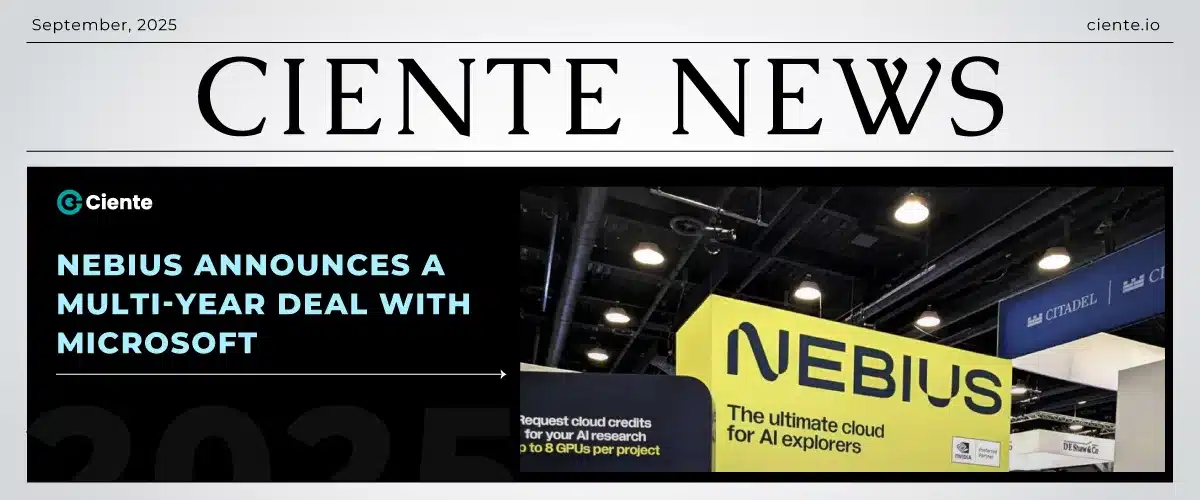
Nebius-Announces-a-Multi-year-Deal-With-Microsoft

Nebius Announces a Multi-year Deal with Microsoft

Nebius Announces a Multi-year Deal with Microsoft

Nebius share jumps after the multi-billion-dollar Microsoft deal triggers a 6.6% boost for rival, CoreWeave.

There have been incessant discussions around what AI is capable of. The thirst and will to build more intelligent, faster, and agile models have observably become insatiable.

But little do they realize the well of computing power that each machine learning application and foundational model actually demands.

Across several countries, there are hundreds of data centers with servers that power your AI systems. And the hunger to unlock AI’s unimaginable potential has led to an unquenching demand for more data centers, and ultimately more computing power.

This is what underpins Microsoft’s latest alliance with Nebius, an Amsterdam-based tech firm.

Here are the tidbits.

The company, spun from the Russian Internet giant Yandex, develops GPUs to train AI models. Under this multi-year contract, the objective is to provide cloud computing power to support AI workload.

Following this arrangement, Microsoft will also receive additional cloud computing capacity. And a consistent supply of AI infrastructure to keep its momentum in the AI race.

On the other hand, the rising demand for Gen AI models can also encourage Microsoft to boost its need for compute power. This could easily result in $17.4 billion deal turning into $19.4 billion one.

It remains a future possibility, as the speculations assert.

For now, Wall Street’s cheers for Nebius sent its shares soaring almost 55% to $99.2 on Tuesday. And if the gains hold, it could add over $7.7 billion to the existing $15.3 billion market capitalization.

Where’s the market headed?

According to McKinsey & Company, the situation is about to turn even more dire- by 2030, data centers will potentially require $6.7 billion to keep pace with the demand for computing power. The race to clasp on to as much data center capacity as possible is on.

And it doesn’t show signs of slowing down in the near future.

With the AI boom widespread across the world, and superpowers such as China and the US competing in the race, the demand is only projected to surge.

Today's rapidly growing digital-first landscape has elevated concerns around data privacy and security. From marketing to the SaaS landscape, this trend has etched itself into the future rulebooks. The thing is, data security isn't a trend. It's a gross dilemma. In recent developments, Hitachi Solutions has covered new heights. It developed a solution to overcome significant challenges in cloud interoperability across the public sector. All in a creative collaboration with Microsoft. Government bodies hold highly sensitive information, of citizens and businesses alike. And your phone numbers and physical addresses are merely the tip of the iceberg. These could easily be a target point for nation-states and cybercriminals. For a body with such a valuable database, data security often goes overlooked. Or at least, not as spotlighted as it should be. Why so? It's substantially due to immense budget constraints, outdated systems, a shortage of talent, and, significantly, the interconnected nature of govt. Services. These elements have hijacked the public sector's progress. These gaps have made the government organizations too vulnerable to hacking. So, Hitachi Solutions and Microsoft have engineered an innovative fix. One that retains the full value of Microsoft's AI tech to unlock more modern and responsive solutions for UK citizens- Secure multi-cloud operability for public institutions to help safeguard their data and accelerate responsiveness. Its chief capabilities comprise: • Private access within Microsoft business apps, AWS, and GCP databases. • Bi-directional data integration without any public internet exposure. • Zero-trust and scalable infrastructure that aligns with the UK's security frameworks. • Maximum use of existing assets doesn't facilitate data duplication. This innovative feat will aid the UK's public bodies in sharing and transferring sensitive public data by connecting systems, while ensuring compliance with requirements. The workflows and data that remain across different environments, such as GCP, Azure, AWS, and Oracle, can now be amalgamated into one. Expensive cloud migrations, primitive tools, and manual workloads are a hitch in the government's cloud operability. But Hitachi's solution is a saving grace. This secure multi-cloud connector facilitates Microsoft apps to access data across GCP, AWS, or Oracle environments in real-time. This is achieved through a private connection that doesn't require any duplication or public Internet access. "The flexibility to use the right tool for the job regardless of where data resides is essential for modern, efficient public services," chimes in the Commercial Director, Government for Hitachi Solutions. Hitachi Solutions' Secure Multi-Cloud Connector Transforms Govt. Cloud Interoperability

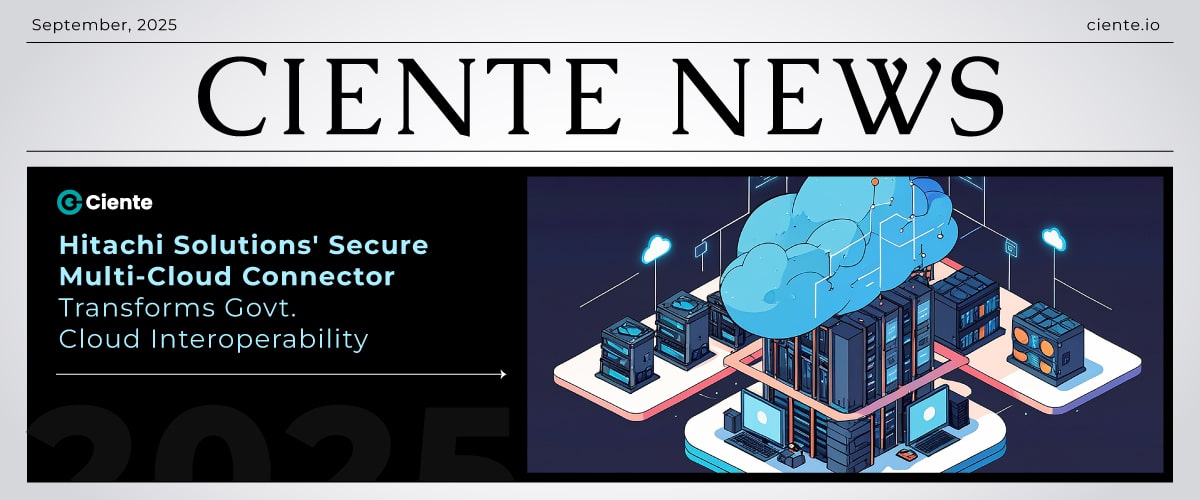
Hitachi Solutions’ Secure Multi-Cloud Connector Transforms Govt. Cloud Interoperability

Hitachi Solutions’ Secure Multi-Cloud Connector Transforms Govt. Cloud Interoperability

With the public sector more vulnerable to hacking, compliance came before innovation. But Hitachi’s new solution might just be the catalyst for change.

Today’s rapidly growing digital-first landscape has elevated concerns around data privacy and security. From marketing to the SaaS landscape, this trend has etched itself into the future rulebooks.

The thing is, data security isn’t a trend. It’s a gross dilemma.

In recent developments, Hitachi Solutions has covered new heights. It developed a solution to overcome significant challenges in cloud interoperability across the public sector. All in a creative collaboration with Microsoft.

Government bodies hold highly sensitive information, of citizens and businesses alike. And your phone numbers and physical addresses are merely the tip of the iceberg. These could easily be a target point for nation-states and cybercriminals.

For a body with such a valuable database, data security often goes overlooked. Or at least, not as spotlighted as it should be. Why so? It’s substantially due to immense budget constraints, outdated systems, a shortage of talent, and, significantly, the interconnected nature of govt. Services. These elements have hijacked the public sector’s progress.

These gaps have made the government organizations too vulnerable to hacking.

So, Hitachi Solutions and Microsoft have engineered an innovative fix. One that retains the full value of Microsoft’s AI tech to unlock more modern and responsive solutions for UK citizens-

Secure multi-cloud operability for public institutions to help safeguard their data and accelerate responsiveness. Its chief capabilities comprise:

  • Private access within Microsoft business apps, AWS, and GCP databases.
  • Bi-directional data integration without any public internet exposure.
  • Zero-trust and scalable infrastructure that aligns with the UK’s security frameworks.
  • Maximum use of existing assets doesn’t facilitate data duplication.

This innovative feat will aid the UK’s public bodies in sharing and transferring sensitive public data by connecting systems, while ensuring compliance with requirements. The workflows and data that remain across different environments, such as GCP, Azure, AWS, and Oracle, can now be amalgamated into one.

Expensive cloud migrations, primitive tools, and manual workloads are a hitch in the government’s cloud operability.

But Hitachi’s solution is a saving grace. This secure multi-cloud connector facilitates Microsoft apps to access data across GCP, AWS, or Oracle environments in real-time. This is achieved through a private connection that doesn’t require any duplication or public Internet access.

“The flexibility to use the right tool for the job regardless of where data resides is essential for modern, efficient public services,” chimes in the Commercial Director, Government for Hitachi Solutions.

This remains an explicitly forward-thinking step for Hitachi Solutions.

One that’ll help public institutions across the UK overcome their innovation lag and ensure compliance.