1. Across your career, you have led tough corporate transformations leveraging traditional frameworks such as 6-Sigma, OpEx, and Lean across complex industries. And now, your role as the Head of Partnerships at Wand AI is an extension of that, but with multi-agent AI platforms in the mix. To what extent has your definition of transformation changed: has it become a bit simpler with automation and AI, or rather more challenging to navigate?
Honestly, the tools got more powerful, and the problem got harder, not easier.
When I was running Six Sigma and Lean programs in oil and gas or mining, transformation meant taking a broken process and squeezing waste out of it.
It was mechanical. You could map it, measure it, and grind it down.
AI flips that. The bottleneck is no longer the process; it’s the willingness of an organization to let go of how it has always worked. So my definition has moved from “make the existing thing more efficient” to “have the courage to redesign the thing entirely.”
Automation makes the execution simpler. It makes the human conversation much harder, because now you’re asking people to trust a system with judgment, not just with tasks. That’s a different muscle.
2. Wand AI poses as an operating system for the collaboration between humans and AI agents, but enterprise buyers have grown hesitant about compliance, agency, and control specs. In such a case, what is your go-to approach in building a strategy that guides enterprise buyers to overcome the fear of black-box automation and cements clear governance over digital workers?
I never open with the technology. The fear isn’t really about AI; it’s about accountability: who answers for it when it goes wrong.
So my starting point is governance, not capability. I walk a buyer through control before I ever show them autonomy: what the agent can see, what it can touch, where a human sits in the loop, and how every action is logged and reversible.
Once a CIO can see that a digital worker operates inside the same guardrails they’d put around a human employee- permissions, audit trails, escalation paths- the “black box” stops feeling like a black box.
The trust doesn’t come from me promising the system is safe.
It comes from handing them the controls and letting them feel that they’re the ones holding the wheel.
3. Modern enterprise platforms such as Wand OS entail diverse capabilities, from handling complex multi-agent workflows to division automation, which can overwhelm and confuse SDRs during sales conversations. How can leaders equip their global partner network to reiterate the pitch without losing its technical essence, while also shifting the focus to outcomes rather than the mechanics?
The trap is falling in love with the machinery. Multi-agent orchestration is genuinely impressive, and that’s exactly the problem, because it tempts people to demo the engine instead of the destination.
What I drill into our partner network is simple: lead with the outcome, keep the mechanics in your back pocket.
A CFO doesn’t want to hear about agent handoffs; they want to hear that a month-end close that took nine days now takes two. I give partners a small set of outcome-first stories tied to real roles, and I teach them to only go one layer deeper when the customer asks.
The technical depth has to be there, but it’s a reserve you draw on, not the opening line.
4. Beyond formal enterprise channels, your background includes structuring massive professional networks like the ESIB Alumni Network. Can you walk our readers through what an ideal collaborative ecosystem would look like where partners truly trust one another to take risks and not merely operate as institutional relationships?
The networks I’ve built that actually worked- whether the ESIB or ESCP Alumni communities, or the scholarship fund we set up around the engineering school- none of them ran on org charts. They ran on people who owed each other nothing and helped each other anyway. That’s the difference between an ecosystem and a contact list.
Real trust in a partner network shows up when someone brings you into a deal before it’s safe for them to do so, when they share a lead they could have kept, or tell you a hard truth about your own product.
You can’t contract that into existence. You build it the slow way: by being the partner who gives first and doesn’t keep score.
Institutional relationships get you the meeting.
Personal trust gets you the risk-taking, and that’s where the real value is.
5. Standard pipeline metrics often fail to capture whether a partner is actually driving long-term strategic maturity, especially across early-stage category creation markets like agentic AI. In your opinion, on what basis must business leaders decide which metrics or KPIs to rely on to underscore the health as well as momentum of their global partner network, with accuracy?
Pipeline numbers lie in a category that doesn’t exist yet. In agentic AI, most of the market doesn’t know it needs us, so measuring a partner purely on closed deals in year one is like judging a farmer in the middle of planting season.
I look at leading indicators of conviction, not lagging indicators of revenue.
Is the partner investing their own people in learning the product? Are they bringing us into strategic conversations, not just tactical ones? Are they generating qualified demand independently, or just reselling what we hand them?
A partner who’s slow on revenue but building genuine capability is a healthier bet than one booking quick wins they don’t understand.
In category creation, momentum is measured in commitment before it’s ever measured in dollars.
6. With the AI-scape moving at a relentless speed, it can be challenging for sales partners to keep up, creating friction and misalignment. How do you instill enthusiasm and clarity among your partners when the product infrastructure itself changes at lightning speed as opposed to sales cycles?
You stop selling the feature and start selling the direction.
If a partner anchors their enthusiasm to a specific capability, every release cycle feels like the ground moving under them.
So I reframe it: the product will keep changing, that’s the point, and the partners who win are the ones riding that curve rather than fighting it.
I’m relentless about communication; no partner should learn about a major shift from a customer. And I try to make the pace feel like an advantage, not a threat: “the thing you couldn’t do for that client last quarter, you can do today.”
Clarity is the antidote to friction. When people understand why something changed and what it unlocks, speed becomes exciting instead of exhausting.
7. As the Head of Partnerships at Wand AI, you are tasked with shaping the very ecosystem where enterprises can design, govern, and operationalize AI as an artificial workforce. Considering the next few years, what’s a definitive shift you expect to see in how partners position AI, and in what way must we gear for this change?
The shift is from selling tools to selling a workforce.
Right now, most partners still pitch AI as software: a better application that a human uses. Over the next few years, the winning conversation moves to AI as labor, digital workers that a company hires, governs, and holds accountable like any other part of the org.
That changes everything about the sale.
You’re no longer talking to a software buyer about licenses; you’re talking to a leader about how their organization gets work done and who, or what, does it.
Partners who still frame this as “a smarter app” will get left behind.
The ones who learn to talk about operating an artificial workforce, with all the governance and trust that implies, will own the category.
We have to start training for that conversation now, before the market fully catches up to it.
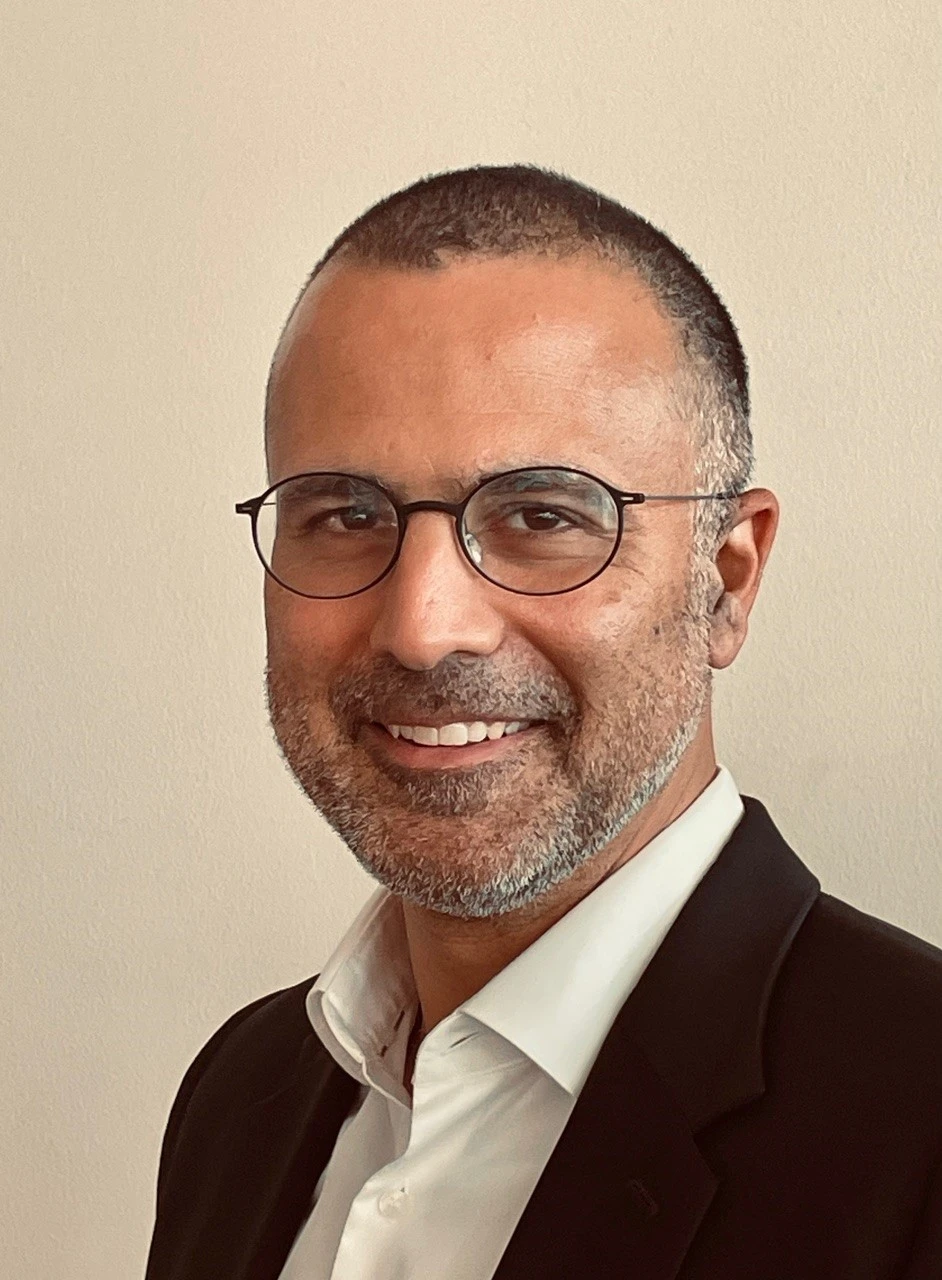
Jean-Paul Sacy, Head of Global Partnerships, Wand AI
Jean-Paul Sacy is Head of Partnerships at Wand AI, the company building the operating system for the hybrid workforce, where humans and AI agents operate as one governed team. Wand OS is in large-scale production across banking, energy, and global system integrators, letting enterprises and governments deploy specialized AI agents with defined roles, permissions, KPIs, and accountability that run core operations end to end.
His career spans leadership roles at BakerHughesC3.ai, Lummus Digital, EY, DuPont Sustainable Solutions and Celerant Consulting, and transformation programs delivered worldwide, from South African gold mines to French hospitals. He is also one of the founders of 42Beirut, a coding school in Lebanon that trains around 200 aspiring developers a year, and remains an active builder of alumni communities through his alma maters, ESCP in France and ESIB in Lebanon.