
Most enterprise SaaS marketing is a performance. Marketing teams hit their lead targets. Sales teams miss their revenue numbers. Everyone blames each other. The board gets frustrated. This cycle repeats every quarter because the playbook is thirty years old.
The world changed. Enterprise buyers have changed. But marketing tactics stayed in 2005.
Brands continue to treat a million-dollar software purchase like a retail impulse buy. They focus on the incorrect audience, metrics, and goals.
So, if you want to really fix your revenue, you must stop doing what everyone else is doing. Here is the reality of enterprise SaaS marketing today.
The MQL is a Vanity Metric
Marketing teams love the MQL. It is easy to track. It looks great on a bar chart. You get a name and an email. You call it a “lead.” If you want a more effective qualification approach, explore better frameworks for SaaS marketing lead scoring.
Your sales team hates them. They know that an MQL is usually just someone who wanted a free PDF. That person has no budget. They have no authority. They probably used a fake phone number to bypass your form.
When you optimize for MQLs, you optimize for volume. You don’t optimize for intent. You flood your CRM with low-quality data. Your sales reps waste hours chasing people who will never make the purchase. That’s not marketing. It is an expensive game of tag.
Stop measuring clicks and downloads. Start measuring pipeline velocity. Focus on how fast an account moves from “aware” to “closed-won.” If your marketing doesn’t shorten the sales cycle, it is failing. Many teams still rely on outdated approaches to lead generation for SaaS that do not reflect buying intent.
You Are Selling to a Mob
Most SaaS companies market to a single persona. They build a “buyer profile” for a manager or a director. They send that person a bunch of emails. They think that is enough. This often happens due to poor SaaS market segmentation strategies.
In the enterprise sales, a single person never makes the call. You are selling to a committee. There are ten or fifteen people involved. You have to convince the end-user, the IT director, the security lead, and the CFO.
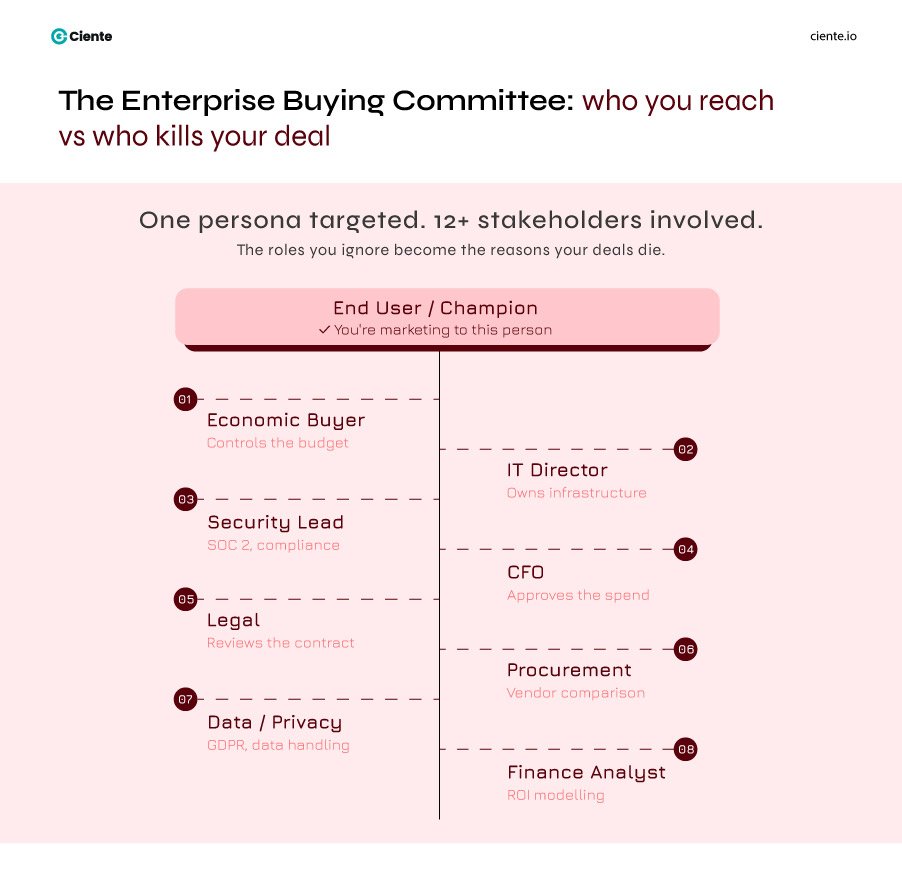
If you only convince the end-user, the security team will kill the deal at the last minute. If you only convince the director, the finance team will veto the budget.
Your marketing must address the entire committee. You need content for the skeptic. You need data for the analyst. You need a business case for the executive. Aligning this effort requires a well-structured SaaS marketing budget. If you aren’t visible to all fifteen people, you don’t have a deal. You have a conversation that will go nowhere.
Gated Content is a Tax on Your Brand
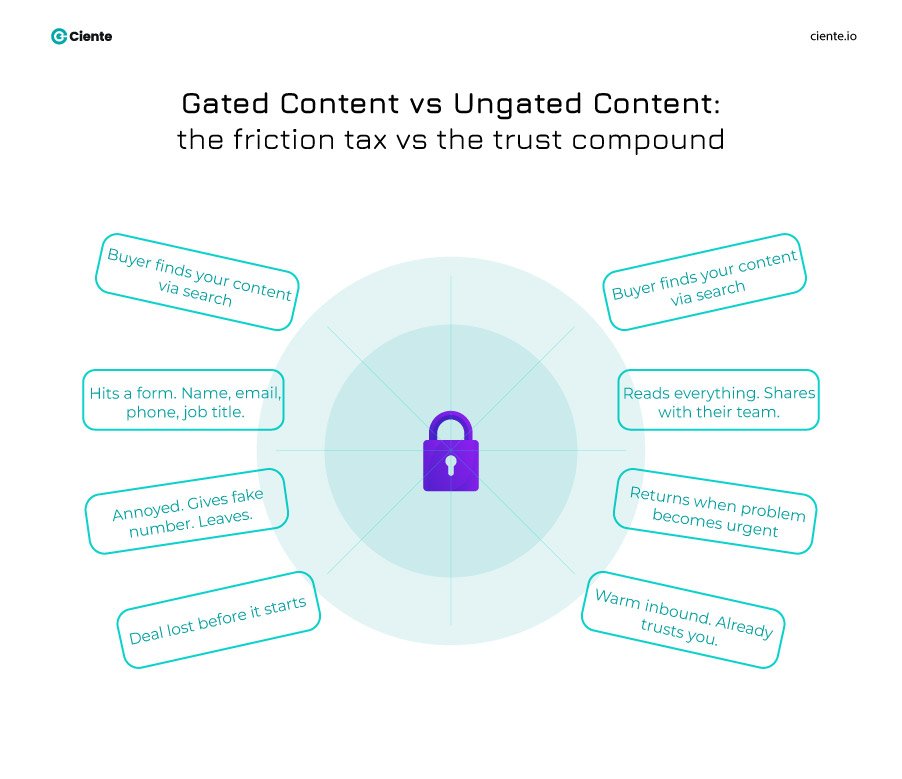
The “gate” is a relic of the past. You write a whitepaper. You hide it behind a form. You think you are “capturing” a lead. Many brands still follow outdated digital marketing for SaaS practices that prioritize form fills over value.
In reality, you are just annoying your best prospects. High-level executives do not fill out forms. They value their privacy. They know that a form fill leads to five voicemails and ten emails they didn’t ask for.
When you gate your best content, you prevent your buyers from learning about you. You spend thousands of dollars on ads to engage people on your site. Then you stop them from reading your best ideas. The logic falls apart.
Ungate everything. Give your insights away for free. If your ideas are good, the buyer will trust you. They will come back when they are ready to solve their problem. Trust is a better lead magnet than a PDF. This is the foundation of strong thought leadership in SaaS marketing.
Dark Social is Where the Real Deals Happen
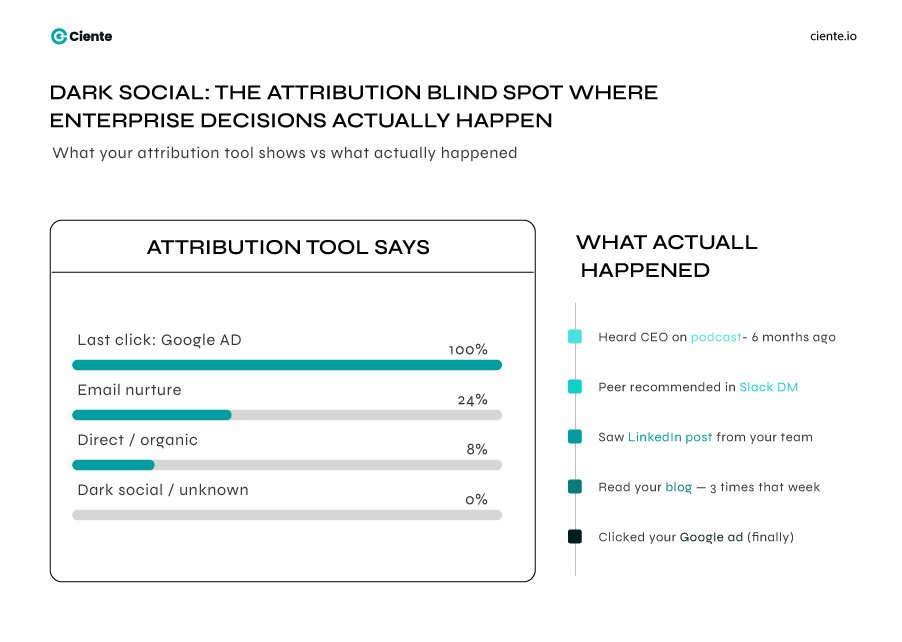
Attribution software is a lie. It tries to tell you exactly where a customer came from. It says, “They clicked a Google ad.” So you spend more on Google ads.
But that is rarely the whole story. The buyer probably heard about you six months ago on a podcast. They saw a peer recommend you in a private Slack group. They read a post from your CEO on LinkedIn.
These interactions happen in dark social. They are untrackable. Because your software can’t see them, your marketing team ignores them. This is why modern strategies like SaaS influencer marketing are gaining traction.
That is a massive mistake. The most influential conversations about your brand happen where you can’t see them. You need to be present in those spaces. You must create content that people actually share with their colleagues in private DMs. Leveraging channels like social media marketing SaaS tools can help amplify that reach. Stop trying to track every click and try to be the most talked-about solution in your niche.
Show the Product
The most frustrating part of buying enterprise software is the discovery call.
A buyer sees your site. They like what they read. They want to see the UI. They click your CTA. Instead of a demo, they get a calendar link. They have to wait three days to converse with a junior SDR who asks them ten qualifying questions. They still haven’t seen the product.
This friction kills deals. Buyers are busy. They want to know if your software can do what it says. They want to see the dashboard. They want to see the integrations.
Ungate your product. Use interactive tours. Use video walk-throughs. Let the buyer perceive the software before they talk to sales. If your product is actually good, be proud to show it.
Buyers assume it’s because the UI is terrible or the product is unfinished if you hide behind sales.
Become a Buyer Enablement Machine
Your “lead” is usually your champion. The prospect wants your product, but must return to the office and fight a war to get it approved. They have to present to a board. They have to justify the cost to a skeptical CFO. Your “lead” is usually your champion. The prospect wants your product, but must return to the office and fight a war to get it approved. Supporting this journey can also involve strategies like SaaS referral marketing to build internal trust. Your “lead” is usually your champion. The prospect wants your product, but must return to the office and fight a war to get it approved. They have to present to a board. They have to justify the cost to a skeptical CFO.
Most marketing teams leave their champion to fight solo. They send them a generic brochure.
You need to give your champion weapons. Offer them a customized pitch deck they can use internally. Give them a security FAQ for their IT lead. Give them an ROI calculator that speaks the language of their finance team.
Your job is to make your champion look like a hero in their own company. If you help them win their internal battles, you win the deal. That’s buyer enablement. It is the most effective form of marketing in the enterprise sector.
Stop Using Jargon
“Leverage,” “synergy,” “digital transformation.” These words mean nothing. They are placeholders for actual ideas.
Enterprise buyers are tired of being marketed to. They want clarity. They want to know precisely how you will save them time or make them money
– they want value.
Write as humanly as possible. Write as you speak. If you can’t explain your value proposition to a ten-year-old, you don’t understand it well enough. Be direct. Be concise. Avoid the corporate fluff that clogs up every SaaS website. Clarity is a competitive advantage.
The Shift to Account-Based Revenue
B2B marketing shouldn’t be about leads. It should be about accounts.
A lead is a person. An account is a business. You don’t sell to people. You sell to businesses.
Your marketing and sales teams should be one unit. They should agree on a list of target accounts. Marketing should surround those accounts with relevant content and ads. Sales should be followed up with personalized outreach.
When marketing and sales act as a single team? The results are predictable. But when they act as separate departments with separate goals, the results are chaotic. Align your metrics to revenue, not activity. This alignment is critical in modern SaaS startup marketing strategies.
The New Playbook
This new enterprise SaaS playbook is simpler. Be transparent. Be helpful. Remove friction.
- Ungate your content. Build authority through education.
- Ungate your product. Let buyers see what they are buying.
- Focus on accounts. Ignore the vanity of individual leads.
- Enable your champion. Offer the tools to market for you.
- Acknowledge Dark Social. Invest in brand and community.
Savvy marketers realize that companies that win enterprise marketing must respect the buyer’s time and intelligence.
The era of tricking people into your funnel is over. Marketers must begin helping accounts with how to solve for. It’s a slower process, but the deals are bigger and the relationships last longer.
Marketing is no longer about who can scream the loudest. It is about who can be the most useful. Fix your strategy. Shorten your sentences. Focus on the buyer. The revenue will follow.