Infotech’s impact on business is profound. Explore 10 ways it’s reshaping industries, supercharging revenue by 58%, and defining the digital age.
The 21st century has witnessed a monumental shift in the realm of business, largely attributed to the dynamic and ever-evolving landscape of information technology or, more fondly termed, ‘infotech‘. The realm of business today is almost unrecognizable compared to its pre-digital counterpart. At the epicenter of this metamorphosis is digital transformation and technology. In this article, we’re taking a closer look at 10 ways infotech has improved and refined the business world today.
1. Seamless Digital Transformation
Since the beginning of time, businesses have utilized manual and paper-based processes. Then came computers, but it wasn’t until the digital revolution that anything truly groundbreaking happened. Digitization is only part of the process; it is also necessary to reevaluate long-standing practices, models, and approaches through structured go-to-market strategy solutions that align execution with evolving buyer behavior. The objective is to spread a data-driven, digital-first mentality.
Today’s businesses, no matter how big or small, can’t function without being digitally present. For example, technologies such as customer relationship management (CRM) systems help businesses record all contacts with customers and AI-driven insights are directing market strategy, both of which are changing the dynamics of business.
2. Introduction of New Technology
There has always been a steady rate of improvement in technology over a decade, but the velocity and breadth of development in the last few years have been unprecedented. There are many practical applications for both technologies, such as blockchain technology and quantum computing, themes further explored in What is Web3?. at this point. There is no doubt that once these technologies are implemented, a company’s productivity, safety, and competitiveness will all increase. Businesses that invest in cutting-edge technologies will be better able to adapt to their customers’ ever-shifting wants and demands.
3. Business Tech: The New Paradigm
Businesses have expanded to new heights because of advancements in technology. Technology is employed across the board in today’s enterprises, from human resources to marketing. Enterprise resource planning (ERP) software is one way that companies may monitor and control their most crucial activities in real-time. similar to frameworks explained in business process improvement, to close more deals. Collaboration tools like Slack and Zoom have revolutionized the method by which teams communicate and collaborate. This indicates that technology is rapidly becoming an integral part of modern businesses.
4. A Leap Towards Digital Business Transformation
Slowly but surely, businesses are adjusting and transforming to survive in the digital era as they realize its importance. Today’s technologies allow for things like online product demonstrations in virtual reality, international online retail, and analytics that go deep into consumer behavior. Companies are no longer limited by their physical location, reflecting the global shift discussed in how omnichannel marketing will help brands grow in 2026 when looking for potentially lucrative business opportunities, all thanks to the global nature of the digital economy.
5. Embracing Modern Technology for Modern Problems
Only cutting-edge technology can tackle today’s challenges. Think about the development of large data sets. The emergence of fresh data formats has prompted the creation of cutting-edge data processing methods, similar to the evolution outlined in modern data stack a guide for businesses 2023. For example, Hadoop and Spark are two innovative programs that help businesses deal with and get insight from enormous data sets. As new cyber dangers appear, cybersecurity solutions must evolve and change as well. Companies can keep one step ahead of would-be attackers with AI-driven threat detection, a topic examined in the role of artificial intelligence in cybersecurity.
6. Digital Technology: More Than Just Computers
We usually picture computer hardware and program code when we hear the term “digital technology.” But it’s useful in many different contexts in the modern world. The Internet of Things gives life to inanimate items, a transformation detailed in how IoT is transforming businesses by imbuing them with awareness and allowing them to metamorphose into different forms of data. To illustrate, think about “smart cities,” which use data in real-time to manage things like traffic and energy consumption.
Then, there’s the advent of technologies like VR and AR, which are altering the ways we interact with the digital and physical worlds. as highlighted in the future of immersive technologies. Virtual property tours are just one example of how cutting-edge technology like augmented reality (AR) is allowing companies to better serve their clients. This area is beyond the limits of traditional computers, opening up novel settings for business innovation and collaboration.
7. Understanding that Digital Transformation is Continuous
The quest to become digitally transformed is endless. It’s a common misconception that it only needs to be done once, but maintaining it takes consistent effort. Since technology is always improving, even the most innovative ideas of today will be outdated in a few years. The best companies encourage a mindset of continuous improvement.
According to recent studies, global spending on digital transformation is projected to hit 3.4 trillion U.S. dollars by 2026.
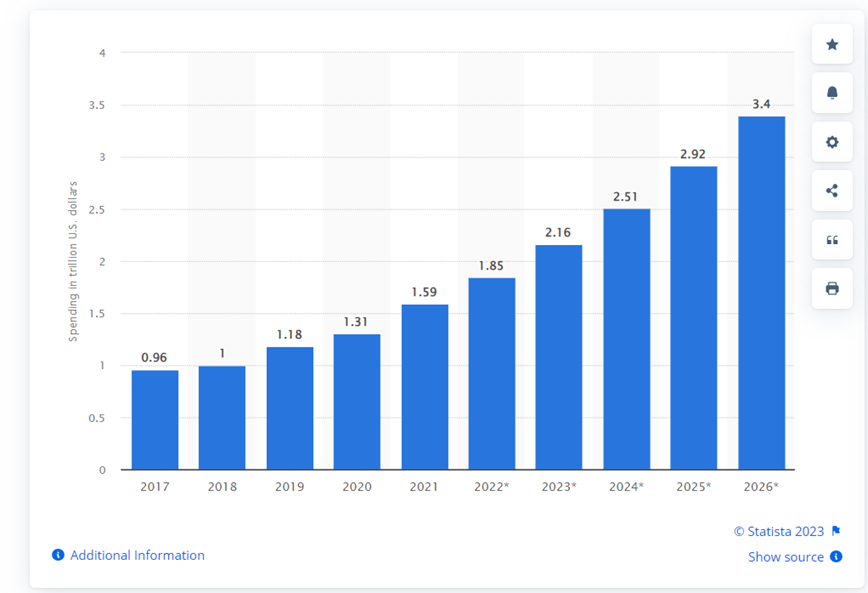
Continuous digital transformation is the practice of continuously updating systems, a journey similar to that described in securing solutions amid the journey to digital transformation. incorporating new technologies into current ones, and reevaluating company strategies in light of technology developments. To stay ahead of the competition, you need to do more than just keep up with modern trends.
8. Offering Tailored Technology Solutions
In today’s intricate economic world, a one-size-fits-all approach won’t cut it. Technology nowadays is a reflection of the value placed on uniqueness. By leveraging IT, businesses may devise and implement solutions tailored to their unique needs and objectives. A fintech company would employ blockchain to ensure secure and transparent financial transactions, while a multinational retailer might utilize big data analytics to learn more about customer tastes in different parts of the world.
As a bonus, AI may be taught to carry out specialized functions across many industries, from medicine (through predictive diagnosis) to journalism (by content recommendation). Such tailored strategies not only increase output but also ensure that businesses stand out, reinforcing insights shared in brand differentiation. from the competition by delivering exceptional customer value.
9. Bridging the Gap with Businesses Technology
As time goes on, the lines between corporate strategy and technology blur. It’s tricky to determine where one ends and the other begins. Today’s corporations are more than just reliant on technology; they constitute it. There would be tight integration between, say, a company’s search engine optimization (SEO), content management system (CMS), data analytics, and other digital marketing platforms. The options and data offered by these sources inform and develop their strategies. similar to frameworks discussed in how data analytics contribute to informed business decision-making.
Algorithms and traditional business subjects like finance and strategy are so intertwined that they may one day be taught together in business school. Businesses and technology may work together to create integrated solutions, rapid innovation, and a constantly moving business landscape.
10. Finding a Place for Business in Technology
With businesses now actively developing and being shaped by technological progress, this is an exciting time to be in the business world. Business opportunities arise as a result of the development of new technologies that address these issues. Consider how the need for remote work opportunities has led to the creation of cutting-edge virtual meeting spaces. Industries like e-commerce, for instance, have contributed to the development of secure means of conducting online payments.
More practical, user-friendly, and consequential technology advances are created when businesses become involved. As businesses continue to expand their presence inside the technological fabric, we may soon be living in a world where technological solutions are not only effective but also comprehensive, sustainable, and in tune with the needs of society.
Conclusion
Infotech is now fundamental to the development of businesses, a reality further examined in why business intelligence is imperative for revenue growth in 2024. in this age of rapid technological advancement. As per Oracle, companies diving headfirst into at least three cutting-edge technologies aren’t just staying afloat—they’re racing ahead! On average, they’re turbocharging their revenue growth by 58% faster than their more-traditional counterparts. And if that wasn’t impressive enough, they’re also boosting their profitability at a blistering rate that’s 80% quicker.
The connection between business and technology is growing as it merges processes and motivates new ideas. As we’ve seen, the impact of Infotech is widespread, and successful companies need to not only adapt to the changing technology landscape but also actively participate in it. In the future, a company’s success will depend not simply on its use of technology, but on how well it adapts to it, maintains its relevance in the market, and fuels its expansion. This partnership portends a prosperous and maybe revolutionary future as technology becomes increasingly integrated into every element of business.