
Well, publications no longer need to put heed into their headlines, because Google might change news search forever- with AI.
At a time when content saturation has reached an unsalvageable juncture- AI is only adding to the humdrum.
Users are fatigued- first it was the snacky content that captured their attention spans, then it was AI-generated slop. All of these have fed into a long and curious case of brain rot.
But content purely for entertainment isn’t the only one that’s losing its quality. It’s as if tech companies have taken a pledge to run all platforms amok with AI- that’s the true potential of this modern tech.
The next target is news headlines.
That was brought to attention by The Verge. The publication noticed that one of their headlines wasn’t the same as what they had written it to be. The original headline (the image below) became “‘Cheat on Everything’ AI Tool.”
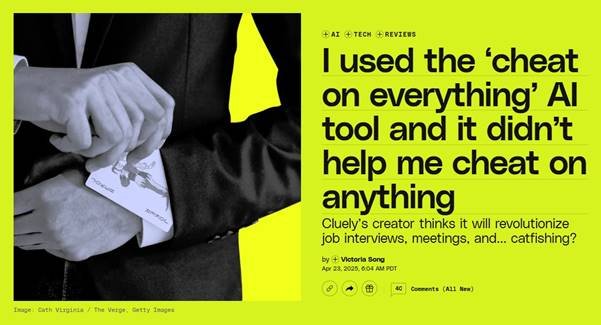
The five-word headline contributed nothing to the article (whether that’s clickbait or short-lived curiosity). However, it did take away something from the piece- it took away the nuance and meaning that the article actually meant to discover.
It’s all owing to Google.
Google is conducting a narrow experiment and attempting to revamp its search queries. What they are starting with is a news space in Google Discover. The tech giant replaced The Verge’s headlines with ones that aren’t written by the publication itself. And that isn’t minute tweaking a really lengthy headline as they used to do, but overwriting the original.
That might be a small experiment according to Google.
However, there’s no indication that Google’s making such changes. That’s how AI is being incorporated lately in content-driven spaces. And the company isn’t stopping here. It’s also planning to transform how websites show up in Search altogether. It’s influencing how publications and brands market content.
Doesn’t this say a lot about authority?
For Google, the objective is simple: elevate user satisfaction by better matching headings with precise queries. The overall intention is to work on web engagement.
But to what extent will this affect brands and publications such as The Verge?
The extent of it seems uncertain. Because it’s not merely influencing content quality, it’s directly about the future of real, unbiased journalism. We all know that AI models are trained on limited datasets.
When AI in search masks the intent by altering all the headlines, it’s the essence of journalism that takes the brunt. The pathway between a reader and a news piece is severed; clickbait will replace it. What happens then?
It’s a future that we can forecast. But when it’s here, it’ll be a trend that snuck up on us.