Okay, let’s get this started with a bang. SEO will become one of the main channels for growth for any organization that wants to stand out.
Google recently changed the landscape of search. While many believed AI search or AI mode would dethrone traditional search paths, this is not the case. Analysts have been speculating on and off about the future of SEO, the rise of AEO, and GEO.
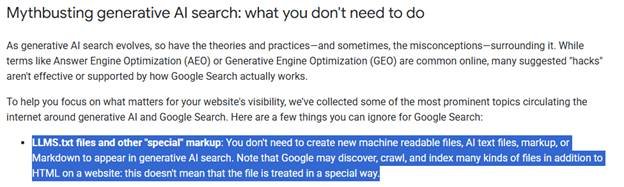
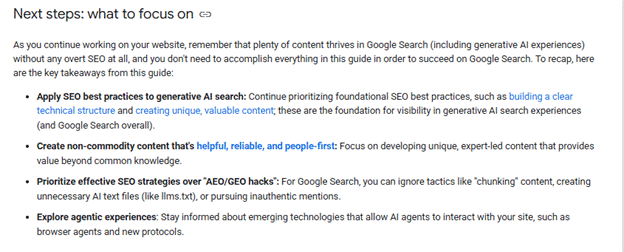
There are many rumours about what works and what doesn’t- much of it is based on speculation and on tactics that rely on getting you to buy something. For example, Google states you don’t need a llm.txt- something many LinkedIn gurus and AEO/GEO experts have sworn was vital. The ongoing debate around AEO vs SEO often fuels these misconceptions.
The Google May 2026 core update has to be an eye-opener. It has provided much-needed validation for effective SEO analysts who have been saying the same thing on repeat: SEO is the linchpin for mentions on LLMs and other AI-based tools.
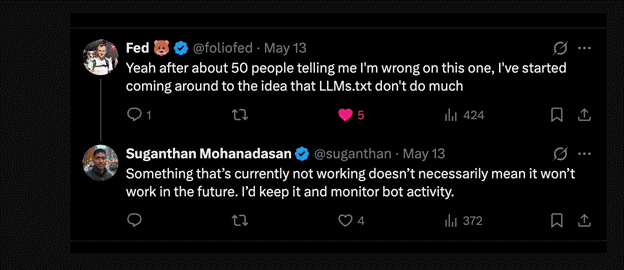
Figure 1: A good observation and alternative approach: https://suganthan.com/blog/how-to-make-website-agent-ready/
Here’s a full breakdown.
The Core of Google’s May 2026 Core Update
Google has a clear mission with its search function: to provide valuable, helpful, and reliable results (though not often, some run-of-the-mill content pieces do pass the filter)
And they are doing everything in their power to provide these results to you- of course, the aim of AI overviews and other LLMs is to keep us coming for more knowledge to act on or to entertain ourselves. The customer won’t come back if this loop isn’t closed.
But what does that mean for businesses? For that, Google has a clear answer: create non-commodity content. This principle is especially important when developing an effective SEO strategy that delivers long-term visibility.
In simple terms, create content your buyers will love to read and learn about. Not content with only promoting what you do.
This type of content has to: –
- Be unique in its research, thesis, and premise.
- Has readable organization- aesthetics matter to bots and humans alike
- Adding content assets like videos and photos to drive the point home and make the UX better.
One thing that stands out and is consistent across all of Google’s updates is the content. And every organization out there, bar a few, knows its content exists to fill a volume goal. Not to solve the pain points of their core buyers.
Unique Content is Necessary to break the AEO/SEO/GEO game.
Clay is one of the best exceptions. Their whole content model is centered around creating better GTM engineers, marketers, and SDRs- so what if Clay is the best tool they need!
That is just a happy coincidence, right?
Clay has mastered Google’s mandate of providing unique, well-researched, and helpful content. So why are so many of your posts dying or not visible on AI overviews or ChatGPT mentions while your competitor is doing just fine? Modern AI SEO tools can help uncover gaps, but they cannot replace original insights.
Well, there are three possibilities: –
- They have genuinely good content that your buyers are searching for.
- They built a better brand/brand reach
- They’re rigging the game.
It isn’t an easy pill to swallow, but they can be overcome by conducting in-depth market research. Yes, tools like Clay have an advantage since they already have that data. Leveraging AI in SEO can make this research process more efficient.
The best method that works is a sales call: What are the constant queries that keep popping up, and how are you solving them?
That is what Google wants- for you to showcase your real work. Not the one that exists in the marketing team’s deck.
Without this step, you can forget those LLM mentions goodbye because that is what they are looking for, too. This is particularly important for brands investing in SEO for SaaS and other competitive industries.
Buyer Searching Habits
Buyer habits have been changing; research patterns, according to our publications, show long tail keywords and natural language queries becoming the norm.
People aren’t searching ” Top 10 restaurants near me” but rather something like, “Hey, can you recommend some restaurants for my children and me? They love Italian, but the little one usually ends up needing a burger when we go out. I don’t want to travel to two different places. Can you suggest one with a good variety?”
Well, that prompt was a handful.
Google is prioritizing this behavior- this is one of the reasons traffic has dropped (plus the incentive to keep consumers on their website)
PS: Many SEO analysts are reporting an increase in traffic after the May 2026 update rolled out. Does this align with what you are seeing?
Preferred Sources: A Game Changer
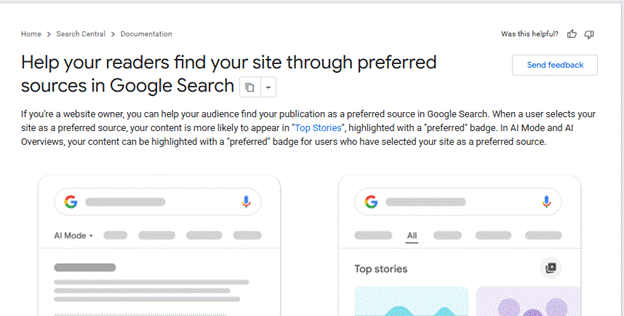
Essentially, Google is asking your buyers to subscribe to your updates and content assets directly into their feed.
But why would someone add you to the list? This can only materialize if you solve their pain points and provide a thoughtful and in-depth perspective, one that helps them expand their own view or prove it.
A note on AI search: Google Picks from Multiple Sources
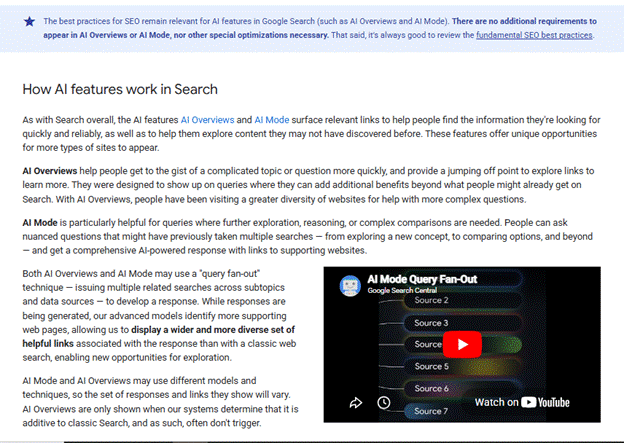
This one is particularly complex to tackle because the query fan-out may present a problem for you- your content shows its impressions, but the buyer isn’t aware of you.
To create a nuanced approach, Google is collating an answer or multiple answers from different sources. And it counts as an impression.
This would be a distribution problem that you will need to solve by either maximizing the number of citations you appear in or by finding a direct path to your buyers’ attention.
A definitive verdict: AEO is GEO is SEO.
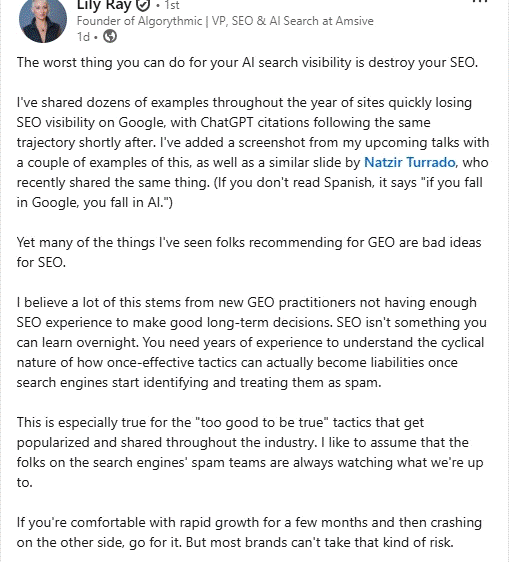
Figure 1: Source: https://www.linkedin.com/posts/lily-ray-44755615_the-worst-thing-you-can-do-for-your-ai-search-activity-7467554630458093568-81Xg?utm_source=share&utm_medium=member_desktop&rcm=ACoAACUd-6IBvn89H1DD8s9zPYb95nWT_zsAfiU
Google’s core updates are making one thing clear: SEO is the future of search. But it is evolving- it is becoming less about ranking and more about searchability in the truest of senses and becoming more customer-centric.
However, this won’t guarantee a spot at the table. Sponsored content is becoming the priority for many organizations, including OpenAI and Google, with competitors often bidding for each other’s brand names.
The game has become complex, but more than ever, original thinking has started to take center-stage: knowledge that can be implemented, not just passively absorbed. New perspectives that lead to curiosity and exploration.
One thing every analyst can bet on is this: the need for a rabbit hole, confirmation, and comparison will never vanish. Your buyers will review you against your competitors, but for that, they will have to browse your website.
Every signal will be a touchpoint for trust, and citations will matter. But also, what will matter is the perspective you are taking a stand on, and timeless SEO tactics to optimize the content. There is a hopeful future here for search and for brands- finally, you can move away from the listicle and showcase what you do.
It is an era where work and the smarter strategy do the talking, while the brands parroting the same message will be left behind.
This is the era of search and of the brand; be prepared.