
The SaaS industry is on dangerous ground. AI doesn’t just threaten marketers and developers, but everything that can be automated. However, SEO may present itself as an unlikely solution to this problem.
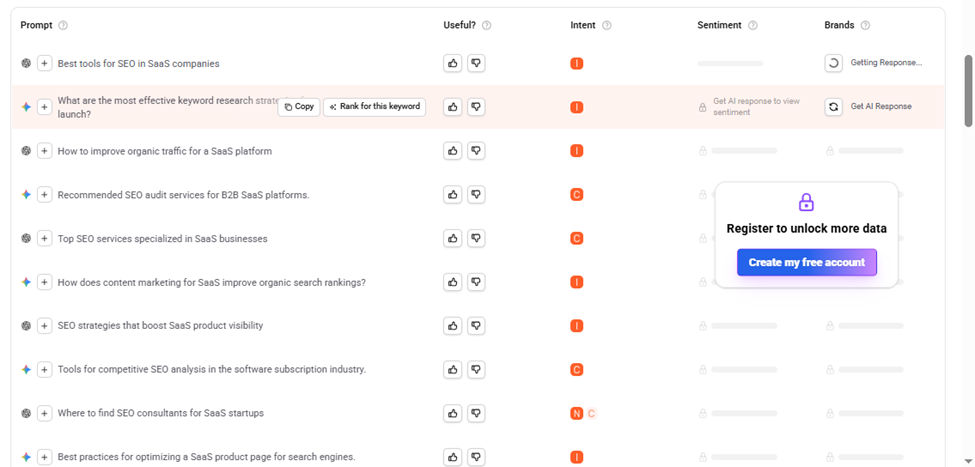
That does sound like hyperbole, doesn’t it? But hear us out- what SEO?
It is optimizing your organization to be visible by generating content/tools that help your users. Unfortunately, in this regard, SaaS is in knee-deep sludge. One of the worst pieces of marketing advice comes from SaaS marketers because the content in SaaS is deceptive. To see how authentic content drives growth, check the SaaS Content Marketing Playbook.
It is meant to convert but not educate. And god, it’s the same topics on and on and on. Take any SaaS company and its YouTube channel- the content is cookie-cutter.
It’s either webinars or some low-grade stock-footage video. (Slidebean being the exception to this case)
But this has directly eroded trust. Silicon Valley, with its infinite wisdom, hedged all its bets on arbitrary solutions that have lost the plot to AI.
And the stock market reflects this reality.
SaaSpocalypse is an apt word for this condition. But what then? How does SEO save SaaS from an apocalypse? It’s easy- we actually focus on what SEO is- a way to share knowledge and build relationships.
There’s also a surprise download at the end that will help you audit your SEO positioning!
Why is SEO in SaaS one of the most important functions in its marketing?
SaaS has eroded trust in software. While some software is genuinely useful, most categories are populated by the same solutions. And with minor tweaks.
Of course, the market thrives on competition and pricing. But the competition ends when neither competitor can stand on the ground well enough to play the game. Then it’s chaos, and that’s where we find SaaS right now.
SaaS marketing and decision-making are abysmal. They are either absorbed by AI giants, become wrappers, or get wiped out. Maybe this is just a wave, and SaaS is here to stay for 10-20 years more.
The question you have to ask is: do your numbers reflect that?
If you know the answer, you can choose to read forward or not.
For those that do, here’s why SEO is so important.
The psychological lens
Knowledge is in abundance- YouTube is filled with productivity, marketing, software dev, and increase-your-revenue and increase MRR hacks.
Then there are academic papers and courses and LinkedIn gurus.
An infinite chain of value, and what are we left with? Most things don’t work. You’re still frustrated at the lack of growth that keeps asking more from you. But what is your response to it? To create more content. And now that you have AI, the volume has increased.
More webinars. More demos. More automation. More is more.
But revenue lags? Avoid this trap by following the strategies in B2B SaaS Funnel Conversion Benchmarks
Why?
Because there is a disconnect between the organization and the people it was created to serve.
People love exploration- it’s what got them hooked on social media, the dopamine hit of not knowing what will be next.
Google became such a big thing because it facilitated this exchange of knowledge and exploration. SEO became the cornerstone of marketing.
For a simple reason: people love to explore and consume knowledge to help them make better decisions. And that’s where search is failing right now.
The SaaS SEO Problem
SEO is meant to improve user experience through on-page and off-page optimization. For step-by-step guidance, see SaaS Marketing Tools
- You build authority by building backlinks and keyword strategies
- You solve problems that your ICP is dealing with through your solution.
Guess what? Most companies are not really bothering with either because they are now optimizing for AIO, GEO, or AEO. Learn practical SaaS strategies in B2B SaaS Marketing Principles. They’ve skipped steps before building the SEO funnel, which is very important to be discovered, even by the LLMs.
And the second is this: SaaS SEO is focused on getting the maximum number of visitors. Not solving specific pain points in their niche- where SaaS actually shines.
The bottom line is always sales or form submissions, with the optimization the usual SaaS companies go for, and it has caused a problem.
People don’t click on links anymore.
- Because AI overviews provide an answer.
- Because sponsored content dominates search
- Because people are conditioned to expect low-quality information on Google searches.
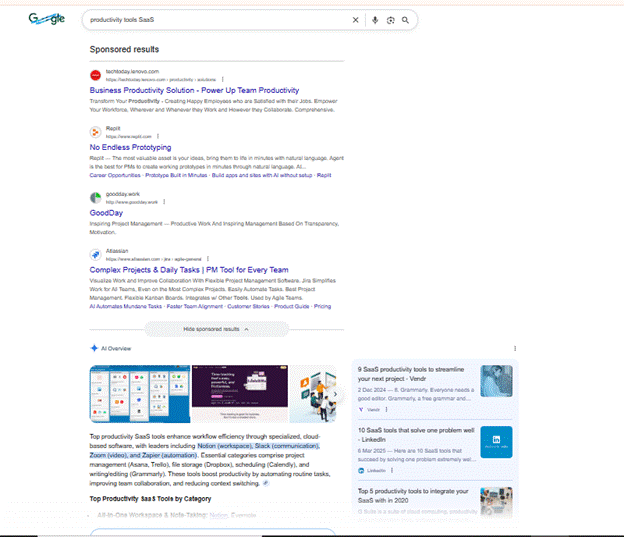
See how skewed the results are. But that also means the problem isn’t limited to SaaS.
The LLMs
LLMs have changed search. Of course, they have. It’s a natural language processor right at our fingertips. They might not be accurate, but at least they exist. And that’s why your CEO is pressurizing you to adopt GEO or AEO.
But LLMs work on the same principles as Google’s bots. They search for authority, mentions, and expertise because it is in the best interest of AI companies to cite the best sources, which they aren’t doing, but they will soon.
Yet, teams are skipping the most vital step in website and user experience building- solving real problems of real people.
For example, let’s search: how do I manage workflows for my team of 4 marketers?
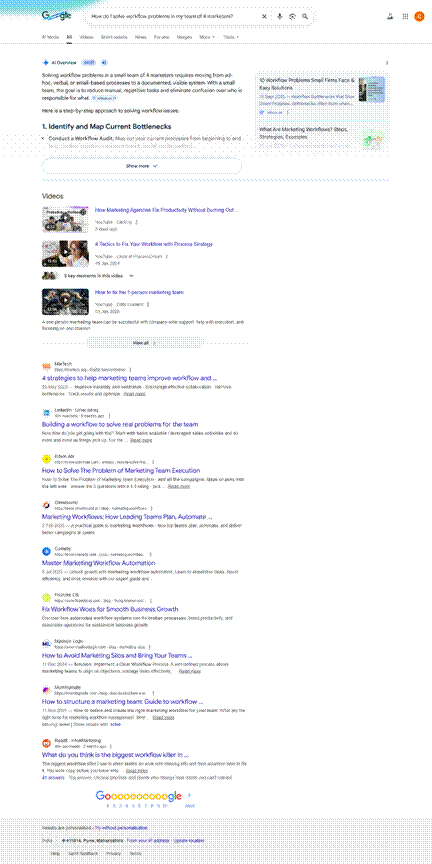
Except for FounderOS and MorningMate, the rest are just editorials. Many tools focus on workflow management, but they don’t reflect real-time problems.
Tools like Asana, Monday.com, and Trello worked because they understood problems. Many new workflow SaaS tools try to copy them, but don’t understand that the marketing teams used SEO to understand and answer real-time problems of their core buyer.
This answers a singular question we raised: SEO is important because it helps answer queries at a specific time of need. See how lead generation fits into this in Lead Generation for SaaS. SEMRush did this back in 2010 when they released tons of SEO courses and how-tos, which were high-level and almost unheard of by an organization.
The same goes for HubSpot. But today’s SEO is devoid of such things, impacting people’s trust in SaaS.
How do you improve organic traffic for your SaaS platform?
Organic traffic.
That’s the question and the answer to the problem. Organic implies there is no force behind it.
There is thought, yes. But not force. We will do two things: first, let’s answer the question without the fluff. Organic traffic improves by answering queries of a particular segment. Learn more about optimizing user experience in SaaS Inbound Marketing.
This involves:
- Understanding the buyer through data and observation.
- Getting objections from sales and solving the pain points in real time, and publishing them.
This doesn’t mean you don’t cover broader topics; they exist to build authority, but the niche topics exist to get you organic traffic and sales. That is as clear as it can get.
Backlink building, on-page, and UI/UX are to improve bot readability.
Second, let’s talk about the elephant in the room, something you can concretely take to the CEO.
Organic traffic is not down because of LLMs; Google has started favoring sponsored content. There’s a reason the traffic has dipped, but people have conflated it with AI’s rise. Ask any SEO expert or consultant- they’ll tell you just how skewed the results are.
But, luckily, people are still searching for content online. Amplify your reach using strategies from SaaS Marketing Insights 2026. Especially, YouTube and LinkedIn via trusted sources. This is because exploration is an inherent quality. Don’t let the numbers fool you; the path to revenue is built on problem-solving.
Yes, that takes time. But it compounds- isn’t that what you want to show the board? Y-o-Y growth! Then why not invest in it?